

Measurement is no longer support: it is direction. This was one of the core ideas of the AMEC International Summit on Measurement and Evaluation of Communication 2025, held under the theme Reputation, Reliability, Results. A global reference event that brought together leaders from the business, academic and tech sectors to reflect on the new challenges of strategic communication in the age of artificial intelligence and misinformation.
At Corporate Excellence – Centre for Reputation Leadership, we share the key takeaways that will shape the future of measurement and the role of communication as a strategic business function.
- Reputation: A Critical Asset in Times of Misinformation
One of the most recurring themes at the summit was the crisis of trust. Studies such as the 2025 Trust Barometer and the OECD report on public institutions highlight a sustained erosion of credibility in governments and the media. In contrast, companies are emerging as the most trusted actors.
This context demands a clear response: reputation can no longer be managed as a secondary intangible, but must be at the heart of corporate strategy. The proliferation of AI-generated content, growing polarisation, and misinformation call for new capabilities to anticipate risks, manage expectations, and proactively build trust.
- AI, Synthetic Audiences and Real-Time Dashboards
Technology is transforming how we measure and interpret the environment. The summit showcased innovative tools such as:
- Synthetic audiences: models that simulate reactions to campaigns or crises, enabling faster contextual analysis.
- Integrated dashboards: multi-channel, real-time platforms to detect early signals and reputational shifts.
- AI-based predictive models: systems that assess the potential impact of content before it is published.
These tools do not replace direct stakeholder listening, but significantly enhance decision-making by aligning actions with social and reputational dynamics.
- The New Role of the Chief Communications Officer (CCO)
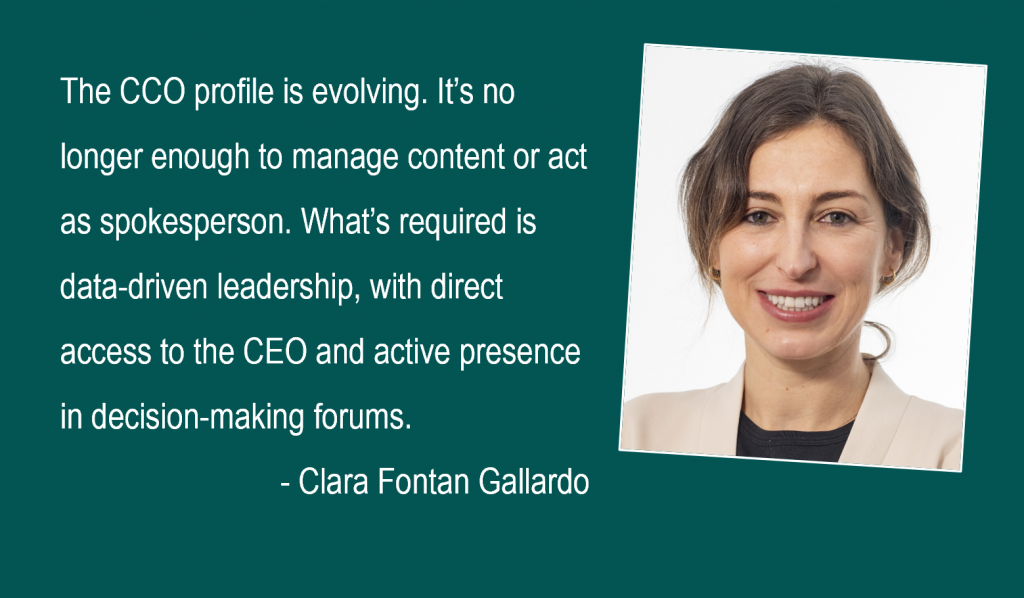
The CCO profile is evolving. It’s no longer enough to manage content or act as spokesperson. What’s required is data-driven leadership, with direct access to the CEO and active presence in decision-making forums.
The summit was clear: measurement must be connected to business outcomes. Communication teams need to develop analytical, anticipatory and strategic capabilities. The key lies in transforming metrics into insights, and insights into decisions that generate tangible value for the organisation.
- LLMs as New Stakeholders
One of the most disruptive ideas shared was to understand large language models (LLMs) as a new class of stakeholder. Tools like ChatGPT, Gemini or Perplexity are becoming gateways to perception and information filters for audiences and decision-makers alike.
This requires a new visibility strategy: optimising content for inclusion in LLM outputs, ensuring credibility of sources, and structuring digital assets (e.g. press releases or websites) to be machine-readable by generative AI systems.
- Owned and Earned Media: The New Visibility Equation
In the AI-driven landscape, owned media and earned media have become the most influential visibility levers. Over 90% of references within LLMs originate from editorial or authoritative sources.
The recommendation is clear: invest in strong content strategies that are semantically optimised and capable of driving real influence, both in traditional search engines and AI systems.
- Barcelona Principles 4.0: A New Compass for Measurement
A major milestone at AMEC 2025 was the launch of the Barcelona Principles V4.0, a strategic update of the global standard for communication measurement. This new version responds to a context marked by AI, audience fragmentation, and the need to align communication with actual business goals.
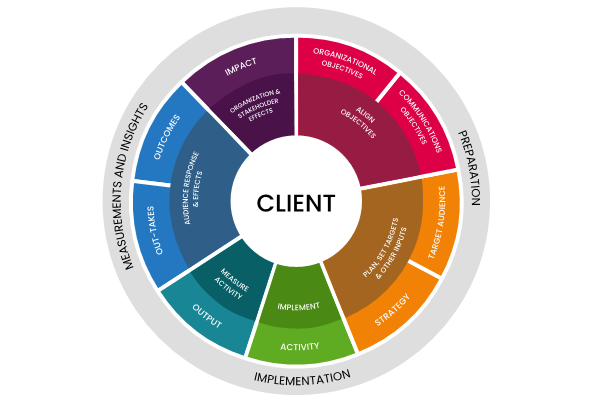
The updated approach is more practical, integrative and operational. It aligns with the Integrated Evaluation Framework (IEF)—a model that enables holistic planning, execution and evaluation of communication strategies.
Integrated Evaluation Framework (IEF)
The IEF outlines a connected sequence that links organisational objectives to stakeholder impact. It includes:
- Preparation: defining clear business and communication goals.
- Implementation: selecting relevant channels, audiences, and activities.
- Measurement: evaluating outputs, outtakes and outcomes, and their organisational effects.
- Impact: analysing results in terms of reputation, behavior and value creation.
This represents a significant shift: from reporting to transformation, with measurement as a tool for learning, adapting and evolving strategy.
The Seven Barcelona Principles 4.0
The new principles offer a practical, universal guide for all types of organisations:
- Set clear, measurable goals
- Understand and define all stakeholder audiences
- Apply integrated measurement across all relevant channels
- Combine qualitative and quantitative analysis
- Eliminate invalid metrics such as AVEs
- Report outputs, outcomes and organisational impact
- Promote ethics, governance and transparency
These principles modernise the language of measurement and establish a universal, accessible framework to foster a culture of evidence-based communication and strategic value creation.
📎 Access the full document here:
Barcelona Principles V4.0 – AMEC
What Can Organisations Do Now?
The summit’s recommendations were clear:
- Strengthen data governance, aligning communication with business objectives.
- Adopt AI tools with ethical and strategic oversight.
- Prepare for AI-driven visibility ecosystems, optimising digital assets and strengthening earned media presence.
- Transform communication teams into strategic insight hubs through listening, analytics and business acumen.
Challenges and Opportunities Ahead
- Trust and reputation will be the currency of the future. Companies must become guardians of truth and transparency.
- Audience fragmentation and polarisation require dynamic, micro-segmented approaches.
- AI is both an opportunity and a risk, depending on its integration.
- Visibility is shifting to AI engines, not just traditional search.
- Anticipation will trump reaction in crisis and risk management.
The AMEC 2025 Summit delivered a powerful message:
Without data, there are no insights. Without insights, there are no strategic decisions. The challenge is not to measure more, but to measure better—with vision, purpose and real impact.
The views and opinions published here belong to the author and do not necessarily reflect the views and opinions of the publisher.