

Memes are more than just jokes in this age of continuously available digital entertainment and content. They are the lifeblood of all generations’ emotions. Memes have a communication of their own and a language of their own. What started out as oddball image macros or online inside jokes has developed into a broad kind of cultural critique. These days, memes serve as living canvases that condense society concerns, criticisms, and goals into a quick, humorous, and easily shared format.
Voices being Viral:
Despite their surface-level frivolity, memes have depth due to their resonance. Whether it’s the gradual grind of adulthood, existential dread about climate change, or fatigue from hustle culture, they simplify and accentuate the ordinary. Thousands of words might not be able to convey the aggregate emotion that a single image can. Memes recount common experiences across time and geography, much like digital folklore. Not just for chuckles, but also as a show of emotional support, situations like gender bias in the workplace, dating app catastrophes, or remote work blues become meme-ified. These depictions of life are frequently satirical and aspirational, showing what society desires while emphasising the conflict between aspirations and actual circumstances.
Memes as News:
However, it’s not just plain entertainment for which memes are being used. In the modern day, memes serve as quick, graphic, and responsive news digests. Memes are becoming more and more popular in the TLDR (Too Long; Didn’t Read) era for summarising significant events or dissecting headlines. Memes spread like wildfire. They start to circulate as soon as news breaks, whether it’s a significant worldwide event, a celebrity drama, or a political gaffe. Audiences may interact with changes nearly instantaneously thanks to this reactivity, which frequently outpaces traditional media channels.
Global Unity through Memes:
Layered irony is a vital component of meme culture. Users criticise politics, media, and norms by using contradiction. Consider “Boomer vs. Zoomer” meme battles, which offer commentary on changing ideals in addition to amusing intergenerational banter. Brands are not exempt either. Memes quickly expose performative activism and greenwashing, holding corporate messages responsible.
Memes have brought people together, deciphered events, and organised action during worldwide movements like the BLM, farmer demonstrations, and climate strikes. Memes serve as coded resistance in censored areas. Dissent is disguised by humor, which makes criticism more powerful but safer.
Bringing Generations Together:
Memes encourage interaction, in contrast to traditional media. Users create many takes by remixing, rewriting, and reposting. Particularly among Gen Z and younger Millennials who value visual humor over in-depth discussion, this fosters community and shared narratives. Memes capture and influence cultural moments, from “quiet quitting” critiques to “goblin mode” self-reflection.
In nations with strict speech regulations, memes provide an extra degree of security. The ridiculousness conceals the critique, providing individuals freedom to remark without direct contact. Punchline subversion is what it is.
Memes are designed to be remixed, in contrast to traditional media. Thousands of variations can be created from a single meme template, each influenced by a particular critique, cultural context, or personal experience. This open-source storytelling allows entire communities to generate meaning together. This is particularly true in India’s digital arenas, where memes depict everything from startup entrepreneurship and wedding trends to political criticism and cricket culture. They are cultural diaries rather than merely comments.
Meme Meets Marketing:
Brands frequently want to participate, but meme marketing calls for skill. Forced relatability is severely penalised, and audiences are extremely sensitive to inauthenticity. When used effectively, memes can increase interaction, start discussions, and humanise brands. When done incorrectly, they turn into cringe-worthy case studies.
Successful examples include Netflix India’s blend of regional humor and Zomato’s incisive pop culture captions. The secret? Reflect the sentiment of the community. Avoid appropriating it. Instead of interrupting a conversation to try to sell something, memes should seem like they belong there.
Future of Memes:
Editorial tactics, political campaigns, and public discourse are already being influenced by memes. We might soon witness memes that are customised by tone, location, and viewer intent in response to trends in real time thanks to cutting-edge technologies like generative AI and deep learning. They are changing, not disappearing. Memes continue to be the most dynamic medium for collective narrative, emotion, and insight as attention spans shorten and social criticism quickens.
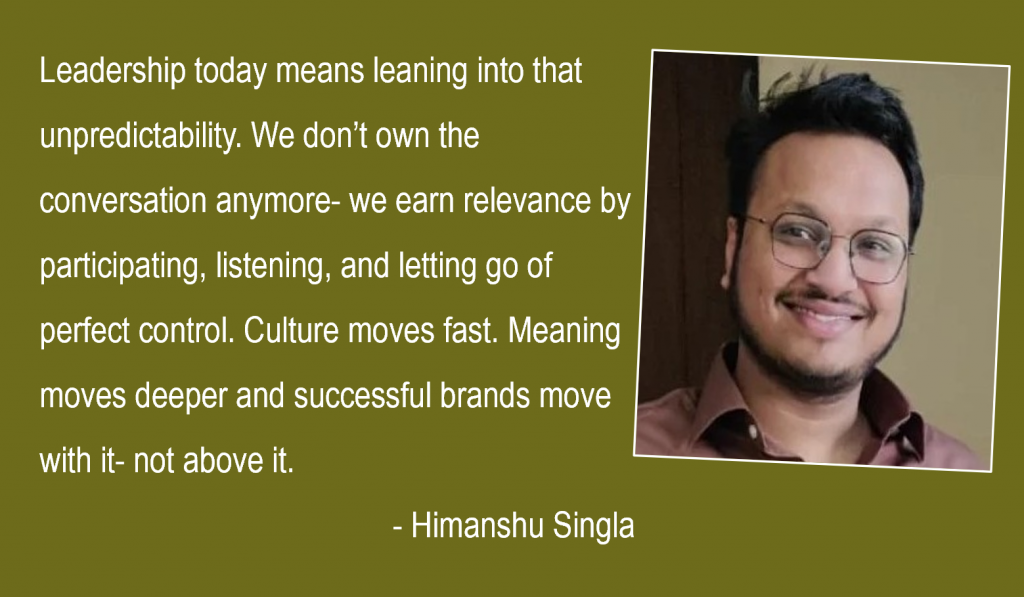
Leadership today means leaning into that unpredictability. We don’t own the conversation anymore- we earn relevance by participating, listening, and letting go of perfect control. Culture moves fast. Meaning moves deeper and successful brands move with it- not above it.”
Because of memes, audiences are becoming co-creators of brand meaning rather than only passive consumers. Humor is a strong compass in this environment, while relevancy is a changing objective. The lesson is apparent for leaders, marketers, and creatives alike: cultural fluency is a must and participation is preferable to perfection.
Your brand is merely background noise if it isn’t paying attention, changing, and sometimes making fun of itself.
The views and opinions published here belong to the author and do not necessarily reflect the views and opinions of the publisher.

