

Let me say this upfront—some moments in the world demand quiet strength, not clever messaging.
As communication professionals, we are trained to respond, to act, to manage narratives. But over the years, and especially in moments of geopolitical uncertainty, I’ve learned that sometimes, not saying something is more powerful than a reactive post or performative empathy.
We live in a hyper-connected world. When global events unfold—whether they’re across borders or within communities—the pressure to “say something” is real. Trends erupt. Hashtags flood timelines. Brands get tempted. Should we comment? Join the narrative? Show solidarity?
Here’s the hard truth: not every conversation is yours to enter, especially not when lives, sovereignty, or human dignity are involved.
The Role of PR in Times of Geopolitical Uncertainty
Public Relations, at its best, is about truth, trust, and timing. In times of uncertainty, it becomes the moral compass of an organisation.
What we say, how we say it, and when we say it—matters more than ever.
It’s not about staying silent out of fear. It’s about exercising discernment out of respect. Our words must pass three filters:
- Is it necessary?
- Is it sensitive?
- Is it responsible?
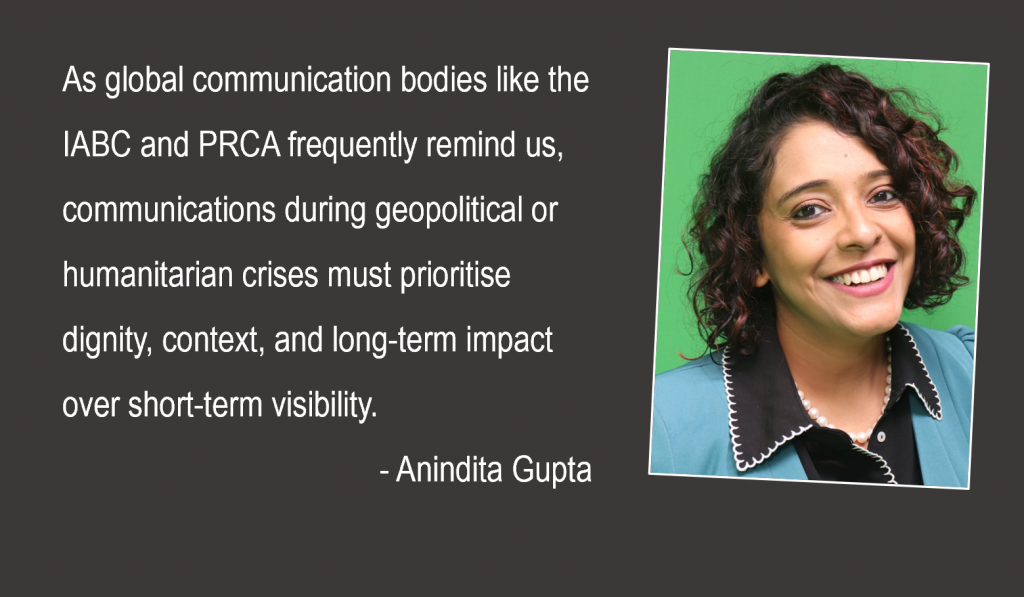
As global communication bodies like the IABC and PRCA frequently remind us, communications during geopolitical or humanitarian crises must prioritise dignity, context, and long-term impact over short-term visibility.
What to DO as a Brand or PR Professional
- Pause and Listen First: Rushing to respond rarely ends well. Take time to understand the situation, the sentiment, and the stakes.
- Audit Your Messaging: Review scheduled posts or ongoing campaigns. A product push during a humanitarian crisis can appear tone-deaf—even if unintentional.
- Be Human. Be Measured.: If your brand must speak—keep it empathetic, factual, and non-political. Avoid virtue signalling or sweeping generalisations.
- Support Internally First: Ask: Are any employees, clients, or partners directly affected? Prioritise communication and care for your own people before making public gestures.
- Have a Prepared Crisis Protocol: Communication teams should have clear, adaptable frameworks for managing sensitive situations. This is not the time to wing it.
What NOT to Do—Ever
- Don’t Hijack the Moment: A global flashpoint is not a branding opportunity. Do not insert your product, service, or logo into solidarity posts.
- Don’t Make It About You: Avoid phrases like “we stand with…” unless there’s direct relevance or meaningful action. If you’re not adding value, don’t add noise.
- Don’t Use Stock Sympathy: Cookie-cutter statements with zero substance only invite backlash. Audiences can spot hollow messaging instantly.
- Don’t Assume Silence Equals Irrelevance: Silence, when intentional and grounded in respect, can be the most professional response. Sometimes it says: We see. We understand. We are present—even without a post.
And Here’s Where We Must Be Better
We, as communication professionals, are not just storytellers—we are stewards of trust. We must push back when the brief says “let’s say something topical” and the topic is conflict, displacement, or tragedy. We must educate our clients and leadership on the long view: relevance fades, reputation stays.
The goal is not to be first. It’s to be right. Not to be loud. But to be wise.
If we want to be heard in times of crisis, we must first prove we can be trusted in times of calm.
A Final Thought
We don’t always need louder messages. We need braver choices. Let’s not chase algorithms. Let’s stand for clarity over clout. Let’s lead with empathy, pause with intention, and speak with impact. Because the best kind of communication doesn’t just reach the world—it respects it.
The views and opinions published here belong to the author and do not necessarily reflect the views and opinions of the publisher.

