

We live in an era when a single social post can recalibrate reputations overnight. “Cancel culture” is shorthand for a range of public responses, from consumer boycotts and amplified social media outrage to institutional disassociation and, occasionally, legal battles. Nearly two decades of advising brands and leaders show that reputational crises hinge less on whether an error occurred and more on how organisations respond. That distinction matters: response often determines whether a mistake becomes an existential crisis.
Therefore, recent events in India illustrate why a nuanced approach to crisis communication has become essential.
In September 2025, Canadian outdoor brand Arc’teryx faced significant backlash after collaborating with renowned artist Cai Guo-Qiang for a fireworks display titled Rising Dragon on a Tibetan plateau in the Himalayas. The event, intended as an artistic project, quickly drew criticism from climate activists and social media users who raised concerns over its environmental impact on the fragile Himalayan ecosystem. The controversy escalated as videos of the vibrant pyrotechnic display went viral online, prompting scrutiny over whether the necessary environmental regulations and approvals had been obtained. In response to the growing outrage, both Arc’teryx and Cai Guo-Qiang issued public apologies. Meanwhile, local authorities launched an official investigation into the ecological implications and legal compliance of the event.1
While corporate missteps can attract global scrutiny, cancel culture in India is often amplified by local sensibilities, as recent controversies in the entertainment space demonstrate. Cancel culture can hit comedians particularly swiftly. In early 2025, India’s Got Latent, a reality/comedy show, was plunged into controversy when Ranveer Allahbadia asked a contestant a highly inappropriate question involving their parents. Legal complaints were filed under multiple laws pertaining to obscenity and indecent representation, and the contentious episode was removed from YouTube.
Similarly, Anubhav Singh Bassi’s scheduled shows in Lucknow were cancelled following complaints from the Uttar Pradesh Women’s Commission that his past performances included “indecent language,” particularly content deemed offensive to women.
These incidents illustrate key dynamics that communicators must understand. Cancel culture is not a single phenomenon; it is an ecosystem composed of social amplification, media framing, stakeholder expectations, and, at times, legal escalation. The most dangerous pattern is reflexive defensiveness or silence — both erode trust. Research from the Edelman Trust Barometer shows that trust in institutions is fragile and often hinges on perceived authenticity and purpose; brands that fail to demonstrate clarity of values and transparent leadership lose credibility quickly.2
So here are a few practical principles for PR leaders and consultancies to follow:
Prepare with scenario-led playbooks: Crisis playbooks should be specific, not theoretical. Map who will speak, what the limits of comment are, and when to involve legal counsel. Run tabletop exercises with realistic social-media timelines; the velocity online is your enemy if you are unprepared.
Rapid listening, measured response: Speed matters, but so does proportionality. Rapid social listening identifies the scale of an issue and key influencers; measured responses acknowledge concern, clarify facts, and express intent, rather than relying on generic corporate statements.
Own facts; be precise about values: Distinguish between apology for harm and defence of opinion. A sincere, targeted apology that addresses concrete harm, paired with steps to remediate, reduces escalation. If an organisation declines to act, explain why in values-based terms rather than through corporate neutrality.
Adopt a multi-constituent approach: Employees, customers, regulators, and partners all see the event differently. Communicate to each constituency with tailored messages, frontline employees need operational instructions; customers need reassurance; partners need frank discussion about impact and next steps.
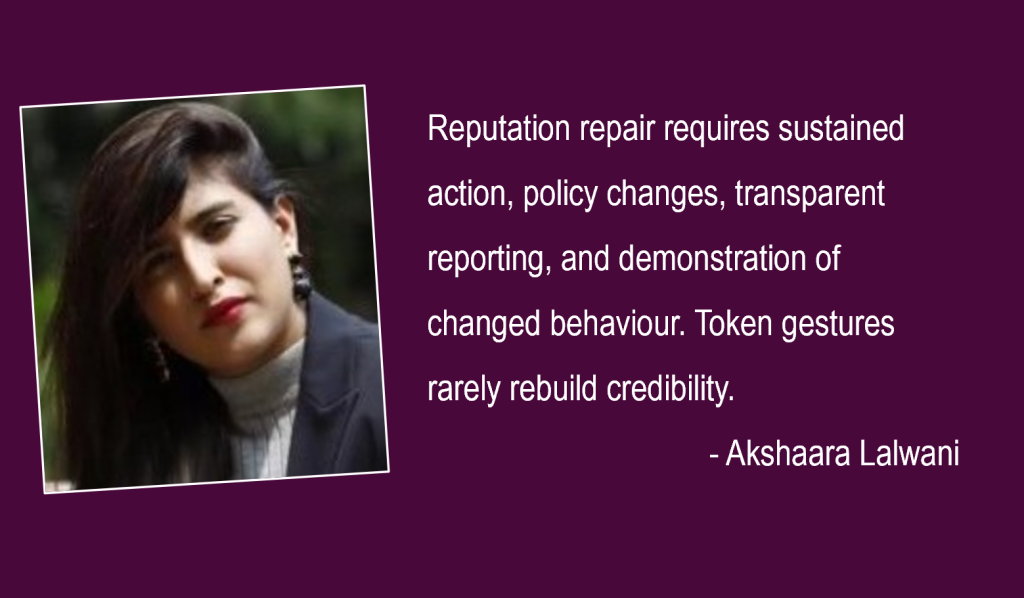
Reputation repair is long-term: Reputation repair requires sustained action, policy changes, transparent reporting, and demonstration of changed behaviour. Token gestures rarely rebuild credibility.
Legal and reputational alignment: Rapid decisions about discipline or disassociation must account for employment law and defamation risk; consult legal counsel early, but don’t allow legal caution to paralyse reputational clarity.
Invest in trust before a crisis: The buffer that protects brands in turbulent moments is accumulated trust. Consistent leadership, community engagement, and demonstrable purpose reduce the risk of permanent reputational damage.
Finally, consultancies must act as strategic stewards, not just message-makers. That means helping clients codify values, preparing them for messy trade-offs, and coaching leaders to communicate with humility and authority. Cancel culture will continue to test institutions but organisations that combine readiness, moral clarity, and human-centred communication can navigate the storm without capitulating to every public outcry.
A crisis serves as a mirror, reflecting what an organisation truly values. Use it as an opportunity to listen, correct, and critically to demonstrate that your values are lived, not just posted.
The views and opinions published here belong to the author and do not necessarily reflect the views and opinions of the publisher.

