

The End of Vanity Metrics: Turning PR into a Measurable Engine of Business Value
Public relations have always been an art form. It’s about that perfect mix of creativity, persuasion, and knowing exactly when to pick up the phone. For decades, we have thrived on sustained relationships and gut instinct. But let’s be honest with ourselves: the landscape has changed. Today, the “art” of PR isn’t enough on its own. To earn our keep, we have to treat PR as a reliable, measurable arm of the business, just like any other department reporting to the Chief Marketing Officer.
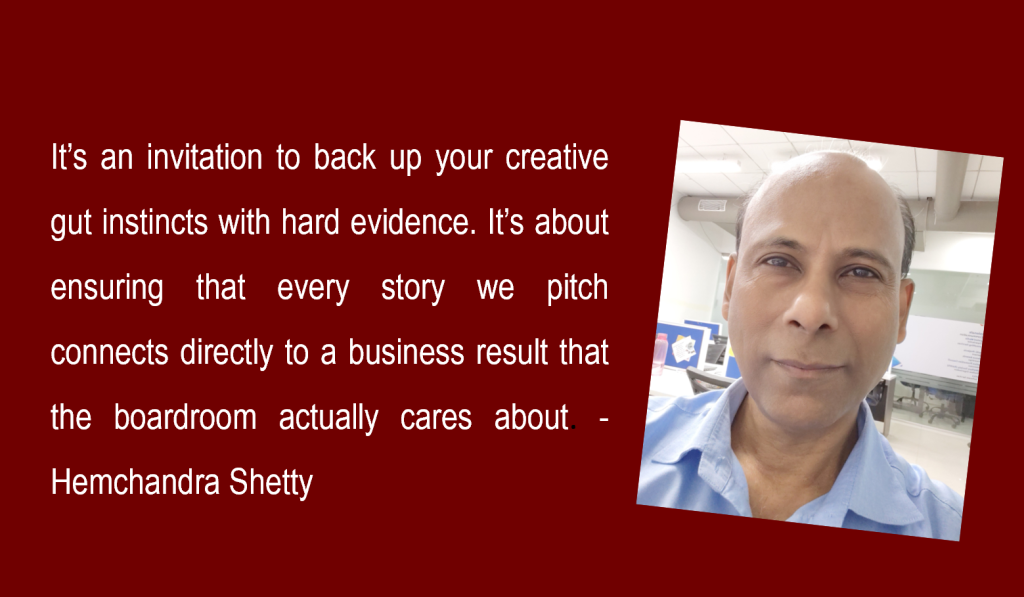
The good news is that proving our value—the elusive ROI—is actually easier than it used to be. Why? Because data is everywhere. We are swimming in it. This isn’t a call to throw away your creativity and replace it with boring spreadsheets. It’s an invitation to back up your creative gut instincts with hard evidence. It’s about ensuring that every story we pitch connects directly to a business result that the boardroom actually cares about.
Start with the End in Mind: It all begins with clarity. Before you write a single line of a press release, you need to define what “winning” looks like. For too long, we’ve been lazy with our metrics, defaulting to “impressions” and counting clips. Those are vanity numbers. They look big on a slide, but they don’t pay the bills.
A modern plan looks at outcomes. We need to look at Share of Voice (are we drowning out the competitors?), sentiment (do people actually like us?), and geographic spread. But even more importantly, we need to look at the pipeline. Did our work drive traffic? Did it convert? When you layer a little bit of simple logic over your work—like tracking a spike in website leads right after a major article hits—you transform PR from “nice to have” into a clear contributor to the bottom line.
Tools Are for Everyone Now: There was a time when you needed a massive enterprise budget to get good data. That’s gone. Accessibility is the game changer here. Tools like Google Analytics, native social insights, and basic listening platforms are often free or very cheap. Even a lean team can build a dashboard that tells a compelling story.
You can use simple visualization tools to make trends pop out visually. And yes, this is where AI comes in. Used responsibly, AI tools are fantastic assistants. They can summarize thousands of social mentions in seconds, find emerging themes we might have missed, and draft the boring parts of reports. This saves us hours—time we can then spend on actual strategy and creative thinking.
Building a Routine That Works The key to making this work is consistency. If you only look at data once a year, it’s overwhelming. But with a practical workflow, it just becomes part of the Standard Operating Procedure (SOP).
Think of it as a loop, start every campaign with a blueprint: What are the objectives? What is our baseline? During the campaign, automate the data collection so you aren’t scrambling later. Send out quick updates on what is working and what isn’t. Then, at the end, present a tight, narrative story: “Here was our hypothesis, here is the data that proved it, and here is how it helped the business.” This builds massive credibility with stakeholders over time.
The Human Element of AI: A quick note on AI and tools like ChatGPT: they are incredibly useful for turning raw data into readable text. They can draft summaries and propose test ideas. But the human role is non-negotiable here. We have to validate the output. We have to add the nuance, the ethical judgment, and the brand voice. By all means, use the tools, but set up guardrails so you know the data is trusted and the content is safe.
Speaking the Language of Business: Ultimately, the goal is to demonstrate tangible impact. If PR leaders want a seat at the strategic table, we have to stop talking about “buzz” and start talking about commercial metrics.
Did we increase trial sign-ups? Did we shorten the sales cycle? Did we improve customer retention? When you can look a CFO in the eye and say, “Our executive visibility campaign shortened the average sales cycle for this product line by two weeks,” the entire conversation changes. Budget discussions get easier. Collaboration improves. You are no longer just the “PR person”; you are a business partner.
Real World Success: We see this happening already. A fintech team proved that their thought leadership articles led directly to a spike in user registrations. A healthcare group showed that better sentiment analysis led to more patient referrals. A consumer brand linked influencer reviews directly to web sales. These aren’t abstract ideas; they are tangible, defensible wins.
The Cultural Shift: This shift is just as much about culture as it is about technology. Data-driven storytelling requires curiosity. It requires the humility to look at a chart, realize a campaign isn’t landing, and pivot. It requires us to speak the language of business—discussing risk, opportunity, and return.
The future of PR is strategic, measurable, and deeply human. By pairing our traditional narrative craft with modern analytics, we can hit our targets and prove our worth. Embrace the tools, but keep the storytelling human. Let the data do the heavy lifting so that you can focus on earning influence at the highest levels.
___________________________________________________________________________________________________
The views and opinions published here belong to the author and do not necessarily reflect the views and opinions of the publisher.

