

In today’s hyperconnected world, crises in healthcare no longer unfold in isolation or over extended timelines. A regulatory update in one market, a data breach, a supply chain disruption, or even a misinterpreted social media post can rapidly escalate into a reputational or operational challenge with global ramifications. For health brands operating at the intersection of science, trust, and public good, the margin for error has never been narrower.
As the healthcare ecosystem grows more complex, traditional crisis preparedness models largely reactive, linear, and dependent on historical precedent—are proving insufficient. This is where AI-powered scenario planning is emerging as a transformative force, fundamentally reshaping how health brands anticipate, prepare for, and respond to crises.
From Reactive Crisis Management to Predictive Preparedness
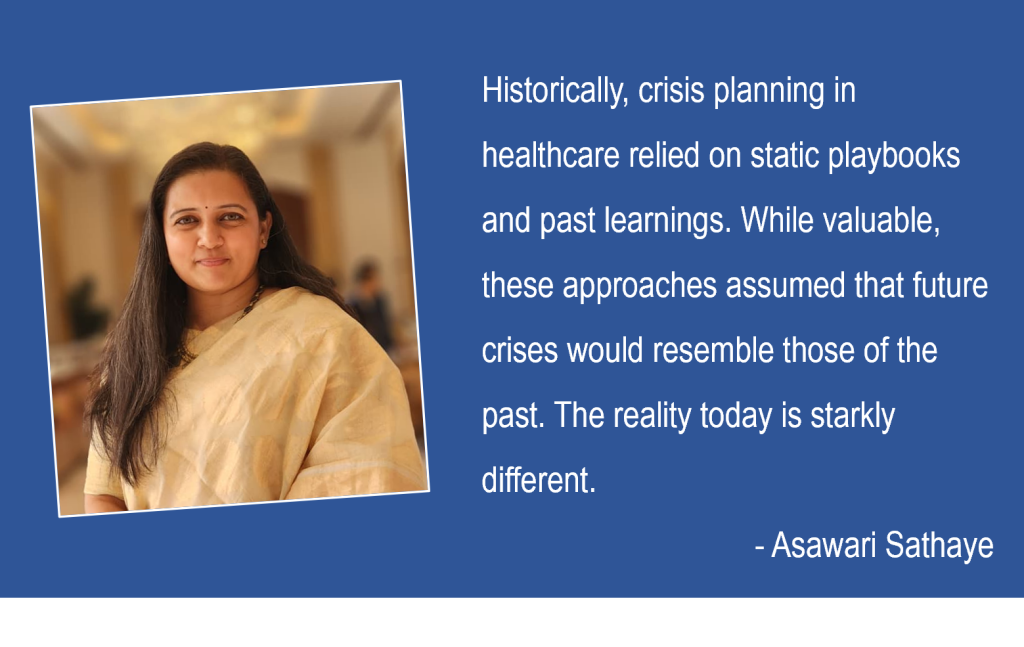
Historically, crisis planning in healthcare relied on static playbooks and past learnings. While valuable, these approaches assumed that future crises would resemble those of the past. The reality today is starkly different. Health crises are increasingly multi-dimensional, driven by factors such as digital misinformation, geopolitical shifts, evolving patient expectations, regulatory scrutiny, and the accelerating pace of innovation.
AI-powered scenario planning allows organizations to move from a reactive posture to a predictive one. By analysing vast volumes of structured and unstructured data ranging from social media conversations and news cycles to regulatory signals and epidemiological trends AI systems can simulate multiple crisis scenarios before they occur. This enables health brands to test assumptions, stress-test response strategies, and identify vulnerabilities well in advance.
Strengthening Trust Through Preparedness and Transparency
Trust is the cornerstone of healthcare. In times of crisis, how an organization responds can either reinforce or erode years of credibility. AI-powered scenario planning helps health brands prepare responses that are not only swift, but also consistent, transparent, and empathetic.
By rehearsing scenarios in advance across patient safety, data privacy, access, and compliance organizations can ensure that their messaging is aligned with their values and responsibilities. This preparedness reduces the risk of fragmented communication, contradictory statements, or delayed responses, all of which can undermine public confidence.
Integrating Scenario Planning Across the Organization
The true value of AI-powered scenario planning lies in its ability to break silos. Effective crisis preparedness is not the responsibility of communications teams alone. It requires coordinated action across medical affairs, regulatory, supply chain, legal, digital, and leadership functions.
AI platforms can serve as a common planning framework, enabling cross-functional teams to collaborate on shared scenarios and response strategies. This integrated approach ensures that when a crisis occurs, organizations are not scrambling to align internally, but are executing against a well-rehearsed, organization-wide plan.
Learning and Adapting After the Crisis
Crisis preparedness does not end when a situation is resolved. AI systems can analyse how a crisis unfolded, evaluate the effectiveness of responses, and identify areas for improvement. These insights can then be fed back into future scenario planning, creating a continuous learning loop.
For health brands, this ability to adapt and evolve is critical in an environment where regulatory expectations, patient needs, and societal scrutiny are constantly shifting
Preparing for the Unknown, Responsibly
The future will inevitably bring crises that are difficult to predict in precise terms. However, AI-powered scenario planning equips health brands with the ability to prepare for uncertainty itself. By embracing predictive intelligence, organizations can shift from merely managing crises to building long-term resilience.
For the healthcare sector, this evolution is not just about protecting reputation it is about safeguarding patient trust, ensuring continuity of care, and reinforcing the sector’s role as a responsible partner in public health.
As AI continues to mature, those health brands that invest early in scenario planning capabilities will be better positioned to navigate complexity with confidence, empathy, and integrity. In a world defined by rapid change, preparedness is no longer optional it is essential.
___________________________________________________________________________________________________________
The views and opinions published here belong to the author and do not necessarily reflect the views and opinions of the publisher.

