

By 2026, reputation will stand as a true competitive advantage, not merely a supporting element of brand value. Organisations that fail to safeguard their reputation in real time will remain stuck in a cycle of reaction and recovery.
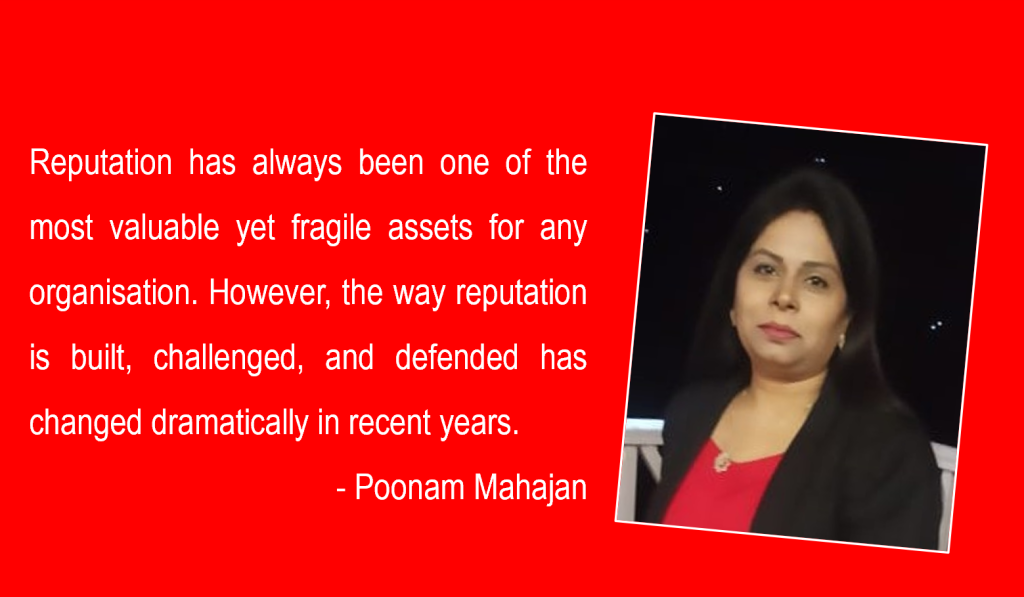
Reputation has always been one of the most valuable yet fragile assets for any organisation. However, the way reputation is built, challenged, and defended has changed dramatically in recent years. As we move closer to 2026, one reality is becoming increasingly evident: ‘real-time reputation management is no longer a best practice, it is a non-negotiable business necessity.’
Reputation has always been a most valuable yet fragile asset, However, the way reputation is built, challenged, and defended has changed dramatically in recent years. As we move towards 2026, one reality is clear: real-time reputation management is no longer a best practice—it is a business necessity.
Recent ‘reputational challenges faced by IndiGo underline a critical lesson’ for all organisations. Operational efficiency alone cannot protect a brand. Reputation resilience today demands emotional responsiveness, narrative control, and leadership alignment in real time. Research shows that customers are far more forgiving of disruptions when brands respond early with empathy and accountability—especially in high-stress sectors like aviation, where tone matters as much as speed.
Studies indicate that nearly 60% of reputational damage occurs after the incident, driven not by the disruption itself but by delayed or emotionally disconnected communication.
In a hyper-connected digital ecosystem where perception travels faster than facts, brands no longer have the luxury of time. The narrative forms instantly—whether an organisation is ready or not.
The Changing Nature of Reputation Risk
Not long ago, reputation crises followed a familiar pattern. An incident would occur, communication teams would assess the situation, and a structured response would follow in measured stages. Time acted as a buffer. That buffer no longer exists.
Today, reputation risk is constant. Social media, digital news platforms, and private messaging channels have compressed the distance between an event and public reaction to almost zero. Conversations begin instantly, opinions form rapidly, and narratives take shape long before official statements are prepared.
What has changed most dramatically is the public’s patience. Silence, even brief, is no longer interpreted as responsibility or restraint. Research shows that stakeholders now expect acknowledgement within hours, sometimes minutes. When brands delay, the absence of communication is often read as indifference or avoidance.
As we move towards 2026, this pressure will only intensify. Brands that lack the ability to listen actively and respond in real time will find themselves losing control of the narrative almost as soon as it emerges.
Why the Aftermath Matters More Than the Incident
One of the most misunderstood aspects of crisis communication is the source of reputational damage. In practice, the incident itself is rarely the sole cause. Research indicates that nearly 60% of reputational harm occurs after the crisis, driven by how organisations communicate or fail to communicate once the issue becomes public.
From my experience in crisis and reputation management, the patterns are clear. Damage escalates when responses are delayed, defensive, inconsistent, or devoid of empathy. Stakeholders evaluate not just what happened, but how the organisation behaves under pressure.
In many cases, it is the tone of communication, rather than the facts, that determines whether trust erodes or stabilises.
Real-Time human judgment is still indispensable in the era of AI
Technology has significantly enhanced the ability to monitor reputation in real time. Social listening tools, sentiment analysis, and AI-driven alerts now provide immediate visibility into public conversations and emerging risks. By 2026, such capabilities will be standard rather than differentiators.
However, real-time listening is only effective when paired with interpretation. Data can highlight patterns, but it cannot fully explain intent, emotion, or cultural nuance. This is where human judgment becomes indispensable.
Organisations that rely solely on metrics without context risk misreading the situation and responding in ways that further inflame sentiment rather than address it.
Speed Without Sensitivity Can Be Counterproductive
The demand for rapid responses has created a new challenge: the risk of communicating too quickly, without sufficient thought. Automated or overly legalistic statements often feel impersonal and disconnected from public sentiment.
Audiences today are highly attuned to authenticity. They can easily distinguish between a response designed to protect the organisation and one that genuinely acknowledges impact. Research consistently shows that brands that lead with empathy acknowledging concerns before offering explanations, recover trust more effectively.
By 2026, reputation management will require a careful balance: speed supported by sensitivity, and efficiency guided by emotional intelligence.
Leadership’s Role in Reputation Management
Another major shift is the growing expectation of visible leadership. Reputation management can no longer rest solely with communication teams. In times of uncertainty, stakeholders look to leaders for clarity and accountability.
Organisations where senior leaders communicate transparently during crises stabilise trust faster. Leadership presence reinforces credibility, making real-time reputation management a leadership responsibility as much as a communication function.
The Tangible Cost of Reputation Failure
Reputation loss is not abstract—it has real consequences. It weakens customer loyalty, erodes employee confidence, unsettles investors, and damages long-term brand equity. Recovery is slow, and trust once lost is often impossible to fully regain.
As transparency increases and stakeholders grow more vocal, trust will directly shape business outcomes. By 2026, reputation will be a decisive competitive advantage. Brands that fail to protect it in real time will remain trapped in recovery mode, spending resources on damage control instead of growth.
From Reactive Responses to Reputation Resilience
The future of reputation management lies not in faster statements, but in stronger systems. Real-time reputation management requires continuous listening, clear escalation frameworks, leadership involvement, and teams empowered to act with confidence.
It also requires a mindset shift from viewing crises as disruptions to recognising them as moments that reveal organisational character. Preparedness, consistency, and values-driven communication are what ultimately determine credibility.
Looking Ahead
As we approach 2026, one reality is unavoidable: reputation now moves in real time, whether organisations are prepared or not. Those who invest in proactive listening, empathetic communication, and leadership-driven response strategies will do more than manage crises—they will earn enduring trust.
Real-time reputation management is no longer about fixing damage after it occurs. It is about building resilience, credibility, and long-term relevance in a world where nothing stays hidden.
_________________________________________________________________________________________________________________
The views and opinions published here belong to the author and do not necessarily reflect the views and opinions of the publisher.