

Processes, skills, and mindset shifts for B2B and B2C teams in a 3-hour takedown, AI-labelling world
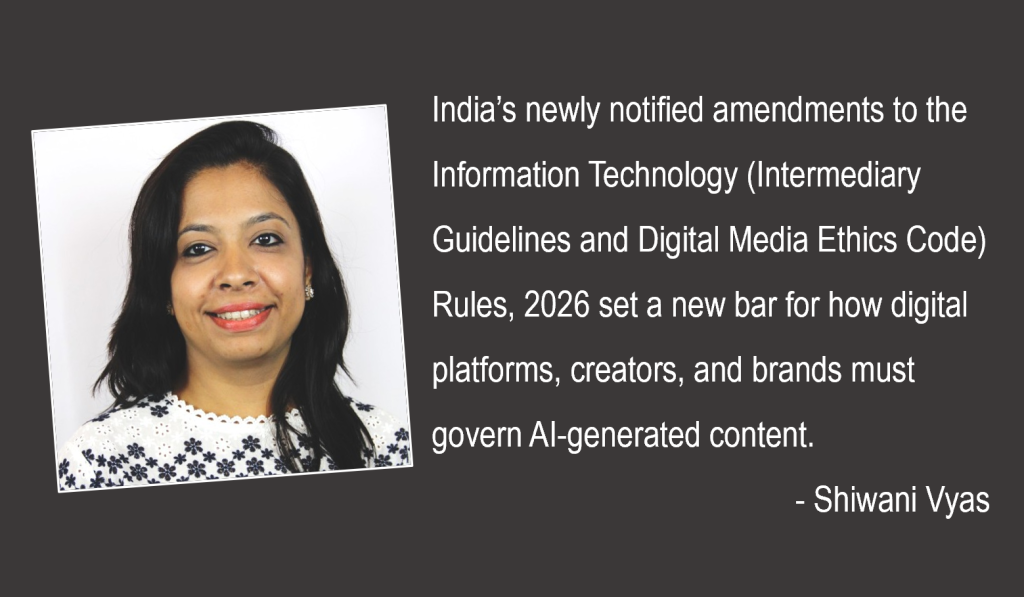
India’s newly notified amendments to the Information Technology (Intermediary Guidelines and Digital Media Ethics Code) Rules, 2026 set a new bar for how digital platforms, creators, and brands must govern AI-generated content. Effective 20 February 2026, social platforms must clearly label AI-generated or synthetic content and remove illegal or harmful content within three hours of being flagged, down from the earlier 36-hour window. For communications teams across both B2B and B2C organizations, this is more than a compliance update; it’s a fundamental shift in processes, skills, governance, and mindset.
1. What it means for the Processes you have in place:
With a 3-hour takedown mandate and mandatory AI-content disclosure, teams need to redesign their operating model around speed and traceability. This requires instantaneous escalation paths, 24/7 social listening, and a pre-publication AI disclosure step for any synthetic media. It also means tightening SLAs with agencies and partners; and building joint rehearsal drills for rapid response across legal, PR, and customer care.
Operational Must-haves
- 24/7 monitoring with automated alerting for spikes in mentions, sentiment, or impersonation
- An AI-content labelling workflow (including watermark/metadata where feasible)
- A three-hour escalation protocol with named owners and backups
- A pre-publishing checklist that verifies disclosure on AI-edited visuals, voice, and video
- Vendor/creator contracts updated with disclosure duties and rapid-takedown cooperation
2. What’s the skill-set shift that is needed:
Comms roles will now need to blend creative excellence (more than ever before!) with technical and policy literacy. Teams must be able to identify what qualifies as ‘synthetically generated information,’ distinguish trivial edits from material alterations, and understand when and how to label. They also need strong reputation risk skills—misinformation triage, authenticity verification, and playbook-driven action—plus data fluency to prioritize responses and optimize content within compliance constraints.
Skill Priorities
- AI literacy (definitions, disclosure norms, watermarking/metadata basics)
- Adept at rapid misinformation and deepfake triage
- Becoming fluent in platform policy and legal issue-spotting
- Cross-functional coordination with product, security, legal, and customer care
- Prompting and editing skills to responsibly use GenAI without eroding brand trust
3. The mindset shift that’s needed.
The goal is no longer just to ship content fast; it is to ship fast, factual, and compliant content. With a core focus protecting audiences, along with your brand. That means embracing transparency-by-design, documenting creative choices, and resisting the temptation to deploy hyper-real synthetic personas without clear labelling. Treat your social handle as a safety surface: you’re not only building narratives and driving brand amplification—you’re safeguarding users from confusion and harm.
4. Implications for B2B and B2C Teams
B2B: Document AI use in demos, simulations, and thought leadership assets. Ensure clear labelling in product explainers and event visuals; expect clients to scrutinize authenticity claims.
B2C: Update influencer briefs with mandatory AI-use disclosure and takedown cooperation. Prepare for faster crisis loops as deepfake misuse rises. Make transparency part of the brand promise—users will reward clarity with trust.
The comms and social media team will now need to operate as a real-time intelligence function: sensing, interpreting, and acting with precision. The need is to combine always-on monitoring, AI governance, fast crisis workflows, legal/policy literacy, and ethical content practices.
_____________________________________________________________________________________________________
The views and opinions published here belong to the author and do not necessarily reflect the views and opinions of the publisher.