

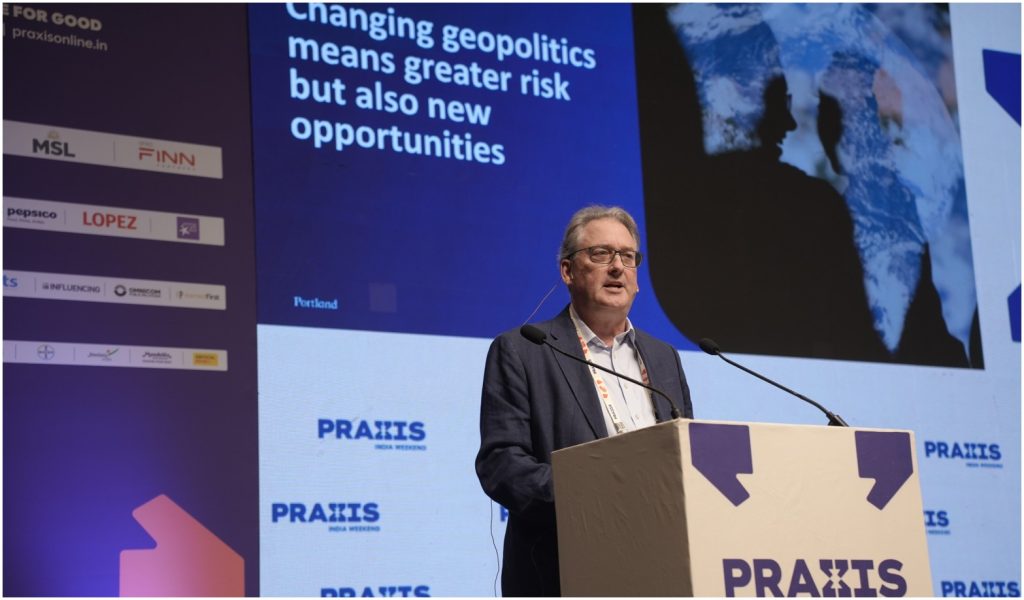
PRAXIS2026 Keynote 12
Simon Whitehead, CEO, Portland
Geopolitics & its Impact on Reputation – Preparing Communication for the Challenge Ahead
We learnt that in a changing world, the coherent use of soft power shapes reputation over the long term – and that India has the assets to lead.
Soft power – the ability to influence others through attraction, culture and credibility rather than coercion, has moved from the margins of diplomacy to the centre of how nations and organizations are judged. It shapes whether people trust us, admire us and choose to work with us, which is exactly what reputation is built on. Like reputation, soft power is earned slowly, can be lost quickly, and can never be declared into existence.
How does Soft Power shape reputation in a changing world?
What does effective communication during change look like today? It is a two-way dialogue where everyone understands the ‘why’ behind the shift and also feels safe enough to talk openly about the impact.
Real change happens through people and how well they understand, trust and stay connected throughout the process. That’s why communication deserves more than a supporting role. When it’s clear, honest and inclusive, it helps people make sense of what’s happening and feel ready to take part in what comes next.
Changing geopolitics brings greater risks, but also new opportunities, and “we are witnessing active competition”, said Simon Whitehead, CEO, Portland, adding that it is affecting all communicators, who are feeling the sharp end of it.
Soft power is not new, but in this changing world it will be more important than ever. Reputation is created over time, and soft power can shape it – positively, and even negatively. He stated strongly that “coherent use of soft power shapes reputation over the long term” and, most prominently, that “soft power creates the conditions for willing cooperation”.
There are many ways to create soft power, he noted, but it can be killed quickly too. It also creates the conditions in which organizations can operate. In an era of change, the coherent use of soft power matters – and anyone who represents an organization should think carefully about what their actions signal.
Putting the focus on India, he stated with confidence that the country has compelling soft power assets with which to build a strong reputation. The first is diversity; the second, the Indian diaspora; the third, international relations, trade and development; the fourth, India’s religions; and the fifth, education and cultural heritage.
Research backs this up, he said, and has produced powerful findings. “Research shows that India’s influence comes from the soft power of attraction, culture and relationships,” he put forth.
How can Indian businesses and organizations utilize soft power? Whitehead’s pointers were: mainly to gauge further with international organizations; to continue to attract people to continue engagement with India (for business travel, education etc); to continue to lead and be a ‘force of good’ for global issues like climate change and most of all, “continue to be engaging”.
What can communicators do to use soft power to build influence and reputation? What is the role for communication? Reputation is earned not announced. Storytelling still matters and it gives organizations a ‘human dimension’. Culture can communicate without looking like communication, and consistency build reputation.
And what can communicators do to use soft power to build influence and reputation? What is the role of communication? His message was clear: Do not overcontrol the narrative, and people love powerful communication. Soft power leads to strong reputation, was his last take.
In a conversation with Shefali Khalsa, CMO & Snr Director – Marketing & Corporate Communications, TransUnion CIBIL the question came up – What is that one belief you believe in, that it is not relevant today? “Corporate reputation has become a buzzword. That is very disappointing. We don’t think deeply these days. It’s not just about shining your communications! You have to demonstrate your reputation values through action,” was his firm answer.
How is reputation management shaped today? What is your advice? He felt that one needs to be far more diligent, local and active about geo politics.
How have you helped companies to understand – taking a stand is more a risk than responsibility? He set the pace with his clear answer. The communications team is all about the role of navigating that difficulty. I think the key is – try to understand your stakeholders, then take time and watch, think and understand and believe you are being a force for good. You need to understand local actions and it’s good not to say too much too quickly. Keep silent? Not at all, and some companies are prepared. Communication is all about understanding the fabric of your leadership.
Brands and facing crisis very often today. And, it’s important how they face it. In a crisis situation is an imperfect statement more important? It is, rather than hiding behind the wall of silence.
Legal answers allow time to react – and, this is perfect was his take.
Do you see the role of communication evolving to strategic counsel to leadership? Yes, was his quick answer. At the end of the day, it is important to engage with external stakeholders, seek their views etc. Think about the risks for your business. It’s about being the adviser – you have to be on board, with the senior team.
Any advice for communication professionals? Communicators should work with stakeholders and also prepare for situations.
_______________________________________________________________________________________________________________________________
The views and opinions published here belong to the author and do not necessarily reflect the views and opinions of the publisher.