

We are at the tail end of what has become popularly known as “Women’s Month.” Another March, another round of celebration. And just like clockwork, the deeper conversations are already being packed away.
There’s something deeply flawed about celebrating women in PR once a year while ignoring the structures that hold them back the rest of the time. If the PR industry issued as many leadership roles to women as it does LinkedIn posts on Women’s Day, we’d have a revolution on our hands.
We may be moving ahead with the year, but one question still demands our attention: Why are women missing from the top of an industry they so clearly dominate?
The iLead Report 2024-25 by WICCI PR and Digital Marketing Council offers sharp insights into this paradox. The numbers, as always, are revealing. Women form a commanding 65% of the communications industry. But look a little closer, and the structural cracks in forms such as unconscious bias, lack of mentorship, pay disparities, and the ever-difficult path back to work after a career break become apparent.
This isn’t a new story. It’s just an old one being told again with more nuance, more evidence, and perhaps this time, more urgency.
The Illusion of Progress
It’s tempting to celebrate the fact that women are “everywhere” in PR. One is bound to spot the familiar faces and the steady presence of women at networking events, panels, press junkets, powering campaigns, driving strategies, and holding it all together. But where are they when the C-suite doors shut?
Representation isn’t the same as leadership. And leadership gives women and opportunity to have influence on business outcomes, culture, decision-making, and innovation. What’s missing isn’t women. It’s the opportunity to thrive on their own terms.
Burnout with a Smile
The PR and Comms industry thrives on tight deadlines and “just one more revision,”. In such a situation, burnout becomes a rite of passage. And while it’s fashionable now to talk about mental health, we must remember that psychological safety isn’t just a yoga session in the breakroom or a therapy app subscription. It should be about creating spaces where women feel heard and respected and not penalised for setting boundaries.
According to the iLead report, 55% of women feel supported in prioritising mental wellbeing, which is encouraging. But it also means that nearly half don’t, which should be a cause for concern.
Flexibility is Not a Favour
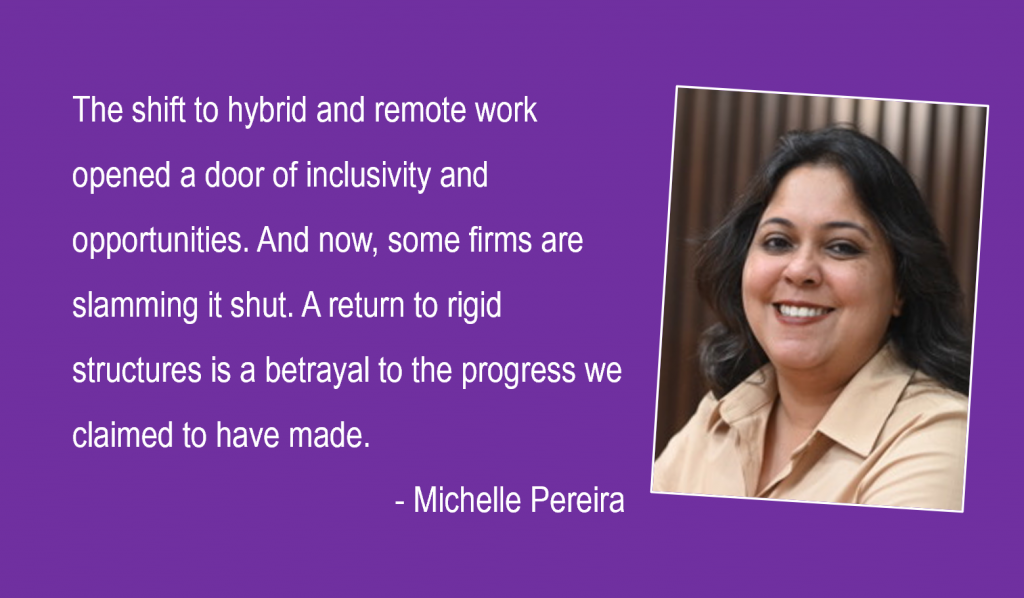
The shift to hybrid and remote work opened a door of inclusivity and opportunities. And now, some firms are slamming it shut. A return to rigid structures is a betrayal to the progress we claimed to have made. For women, flexibility given by hybrid/remote work can be a career enabler, allowing them to stay in the game and stay sane.
AI and automation might be the future of communication, and women must not be left behind. But here’s the catch: tech adoption barriers are real, especially across generational lines. If we’re serious about upskilling, we need to look beyond webinars. We need reverse-mentoring, safe learning spaces, and a genuine willingness to meet people where they are.
When Metrics Drive Change
One thing that gives me hope is the growing use of real metrics like promotion rates by gender, internal mobility indexes, pay equity audits, and retention analysis. These, when tied to leadership accountability, force us to answer uncomfortable questions:
- Are we promoting women at the same pace as men?
- Are our mid-level female managers moving into decision-making roles?
- Are women being mentored or just managed?
- Are we rewarding loud voices or valuable contributions?
Unsurprisingly, we find that diverse leadership teams generate better ideas and stronger client results. But what’s surprising is how long it’s taken for the industry to accept it.
A Movement, Not a Moment
All of this brings us what’s perhaps the most important point: why does this conversation only emerge every March?
We cannot keep dusting off gender inclusion once a year, putting on pink blazers, and hosting panels about “women in leadership” only to forget them by April. If intentions are real, they must last. It’s a systemic problem that demands consistent, visible, and measurable action.
And above all, we need to remember that women in PR don’t need saving. They need systems that stop sidelining them.
The views and opinions published here belong to the author and do not necessarily reflect the views and opinions of the publisher.

