

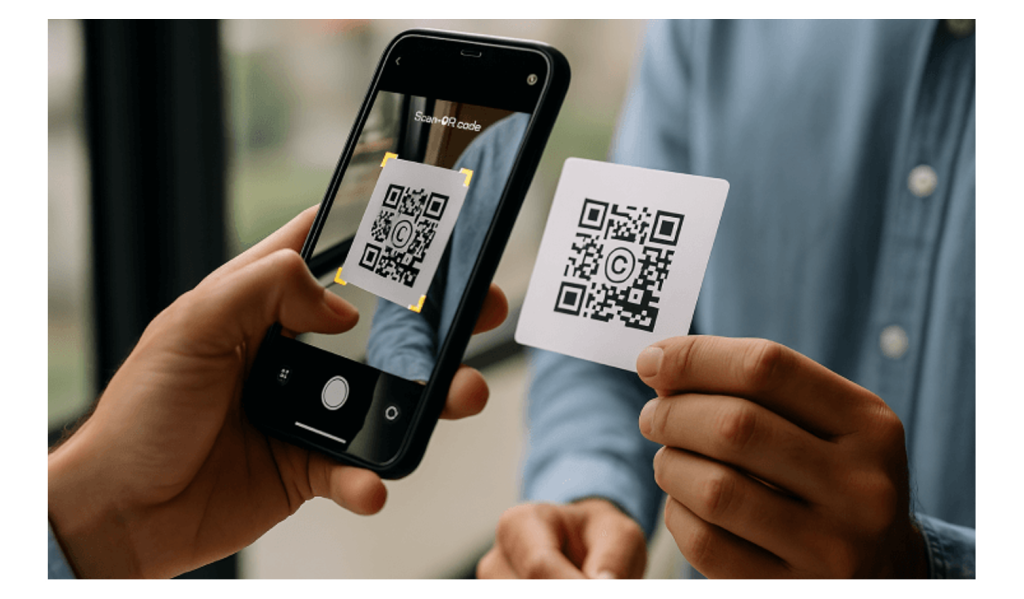
If the last decade of Indian advertising was about getting consumers to “click here,” the present is all about getting them to “scan here.” The humble QR code—once dismissed as a geeky eyesore—is now everywhere, from temple walls to public toilets. But beyond payments, these black-and-white mosaics have quietly become powerful tools of storytelling, accountability, and public relations. In India, where mobile penetration is deep and UPI transactions cross 14 billion a month, QR codes are evolving into cultural artifacts—bridging devotion, governance, and brand narratives.
From Piety to Pixels
This year’s Iskcon Rath Yatra in Kolkata marked a fascinating first: the century-old religious procession added a digital layer by introducing QR codes that allowed devotees worldwide to live-track the chariot’s progress. Traditionally, Rath Yatras are about physical presence and darshan. By embedding a scannable code, the organizers extended spiritual participation to millions stuck in distant cities or abroad. Suddenly, faith wasn’t bound by geography. The move also reflected a PR masterstroke—projecting Iskcon as both tradition-rooted and tech-savvy. Social media chatter hailed it as “the perfect blend of devotion and digital.”
Similarly, municipal authorities are discovering that QR codes in temples can double as educational touchpoints. Some temples in Tamil Nadu and Gujarat have experimented with codes that lead worshippers to pages explaining the mythology behind deities, slokas, and rituals. For the younger, smartphone-native devotee, this transforms the temple visit into an interactive cultural lesson. For temple trusts, it positions them as transparent, modern custodians of heritage.
Toilets as Scanning Zones
The utility of QR codes is spreading into some of the least glamorous spaces too. In Coimbatore, city police introduced QR-coded beat teams earlier this year. Citizens scanning the code on stickers pasted across neighborhoods can instantly access the contact details of the officer in charge of their locality. This dramatically reduces response time while enhancing the image of the police as accessible and accountable. For a force often battling perception issues, the QR sticker is not just technology—it’s reputation management.
Meanwhile, sanitation drives across Nagpur have shown how QR codes can make even toilets part of a PR campaign. As part of the city’s eco-friendly Ganesh festival initiative, mandals were encouraged to register digitally via QR codes. Linked to this was a sanitation competition rewarding the cleanest community spaces. The codes thus turned into micro-nudges that tied eco-sensitivity, citizen pride, and digital governance together. The story wasn’t about “scan and pay”; it was about “scan and participate.”
Brands Jumping on the Bandwagon
Marketers are quick to see the symbolic power in these scannable squares. FMCG brands have experimented with festival-linked QR storytelling. Aashirvaad Atta’s Chhath Puja packs carried Madhubani motifs with QR codes that redirected consumers to videos about the festival’s rituals. It earned the brand not just attention but respect for amplifying a regional festival often overlooked by national campaigns.
Why QR Codes Work as PR
Three reasons explain why QR codes are evolving into PR tools in India:
- Low-cost, high-reach medium – Printing a sticker costs pennies, but the scan can open up infinite storytelling.
- Blending offline and online – In a country where the sacred and the civic are lived physically, QR codes add a digital afterlife to the experience.
- Participation over promotion – Scans don’t just broadcast; they invite users into co-creation—whether that’s registering a Ganesh mandal, learning about Krishna, or contacting your local cop.
The road ahead
Picture QR codes in railway waiting rooms that unlock mini-museums of Indian Rail heritage. Or public toilets where a scan not only rates cleanliness but also sends a message of appreciation to the sanitation worker. Each scan then becomes a karmic act—rewarding brands, governments, and institutions with goodwill.
In India, where faith and function often intermingle, the QR code has transcended its role as a payment gateway. It has become a narrative gateway. From chariots to chawls, shrines to stations, the squares are quietly scripting a new chapter in public relations. And the smartest communicators are realising that sometimes, the best stories don’t need a 60-second film—they just need a 2-second scan.
The views and opinions published here belong to the author and do not necessarily reflect the views and opinions of the publisher.

