

In aviation, metal fails rarely. People fail often. And when they do, brands break faster than aircraft do.
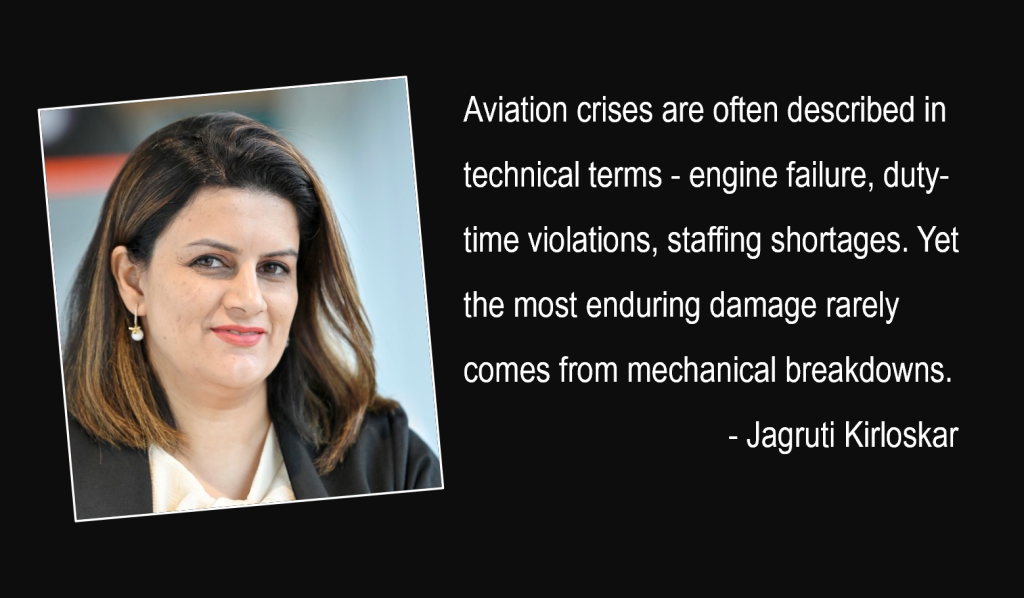
Aviation crises are often described in technical terms – engine failure, duty-time violations, staffing shortages. Yet the most enduring damage rarely comes from mechanical breakdowns. It comes from emotional breakdowns among passengers, families, and frontline employees who absorb the shock multifold. The recent Air India tragedy and the IndiGo operational meltdown reveal this truth with painful clarity and offer vital crisis-leadership lessons.
As quoted by Warren Buffett – It takes 20 years to build a reputation and five minutes to ruin it…
A powerful reminder that crisis communication isn’t about spin; it’s about safeguarding decades of trust in minutes. Crises don’t just expose operational weaknesses; they expose the company’s values. When the stakes rise, it’s not the systems but the people who break first. And when employees and passengers are left without clarity or care, even the strongest brand can unravel in hours.
IndiGo’s December 2025 crisis, with thousands of cancelled flights, choked terminals and passengers sleeping on floors, was not just a tragedy of loss but of mass emotional strain. Travellers waited long hours without updates. Ground staff privately admitted feeling “helpless and attacked” under uncertainty of events. In an era where consumers judge brands by how they behave in crisis, emotional neglect becomes reputational risk. Leadership must recognise that frontline employees are not operational units; they are emotional shock absorbers.
A lie gets halfway around the world before the truth has a chance to put its wings on…..
What stood out for me was Air India’s silence, as speculation on social media quickly shifted toward blaming pilot error. It created a perception in the minds of people that the airline was willing to let its crew shoulder blame before facts were known. After a tragedy, leadership must protect both truth and trust. A simple statement of support for the pilots and a commitment to await investigations would have reassured all stakeholders. By not countering premature conclusions, did the airline miss an opportunity to show steadiness, empathy, and principled leadership?
Strong brands don’t avoid storms – they communicate, adapt, and rebuild trust faster than others.
Protect your employees first, and they will protect your brand…..
In any crisis, employees hold the line. When they feel informed and supported, they project calm. When they feel confused or overwhelmed, the response collapses. Caring for employees is not just compassion – it is strategic.
People don’t remember the disruption; they remember how the organisation made them feel. One moment can shake a brand, but the right response can reaffirm it.
When everything seems to be going against you, remember the airplane takes off against the wind……
Crises will continue, but emotional fallout is preventable. Crisis leadership today demands three things – speed, empathy, and truth – delivered consistently. The key is simple: tell it all, tell it fast, tell the truth. In turbulence, people look for one thing: a voice that is calm, clear, and human.
When the dust settles, it isn’t the fall that matters – it’s ultimately the strength of your return.
________________________________________________________________________________________________________
The views and opinions published here belong to the author and do not necessarily reflect the views and opinions of the publisher.