

An IPO represents a milestone achievement, but the real work begins after listing day. Post-IPO, stakeholder expectations shift from visibility to performance. Investors, regulators, and the public demand clarity on business results, governance standards, and growth strategies. Success requires a disciplined approach to communications built on seven core pillars.
Consistency
Align all communications for investor relations, media engagement, and internal channels with the narrative established during the IPO process. Maintain visibility through regular media interactions, thought leadership articles, and industry events. Utilize digital platforms including podcasts to position your company focused on sustainable, long-term growth.
Regulatory Compliance
While SEBI’s Prohibition of Insider Trading Regulations (2015) do not explicitly mandate silent periods, publicly listed companies typically observe communication blackouts 15–30 days before quarterly earnings announcements. These restrictions end upon public disclosure of results. Understanding these timelines is essential for coordinating communications activities while maintaining regulatory compliance and preventing inadvertent disclosure of material non-public information.
Transparency
Public companies operate under heightened scrutiny. Minor issues can escalate quickly, affecting both reputation and stock performance. Provide regular, accurate updates on financial performance, governance practices, and strategic priorities through investor relations channels, social media, and your corporate website.
Crisis Preparedness
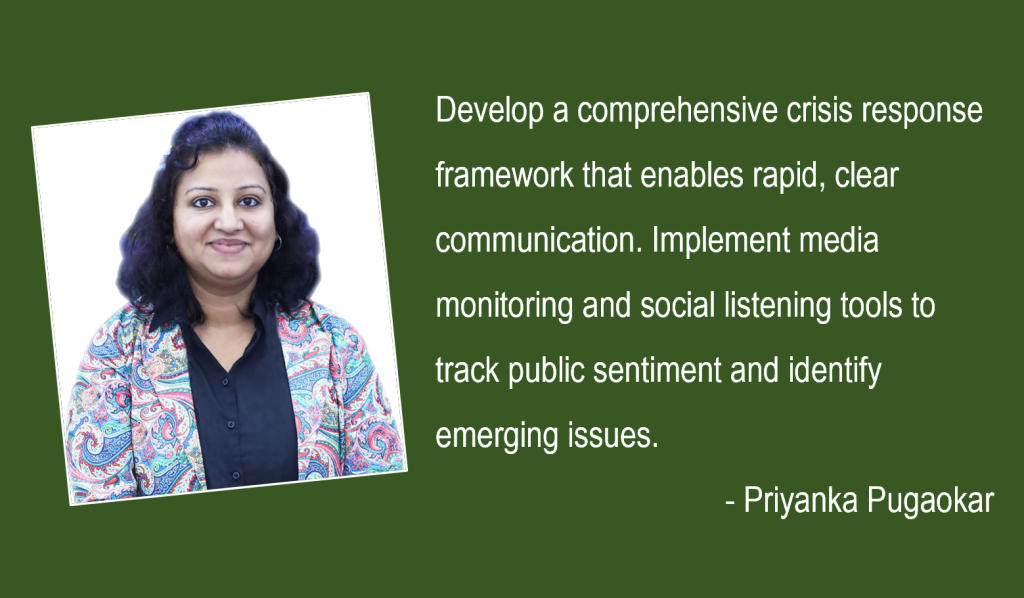
Market volatility, regulatory inquiries, and adverse news can emerge without warning. Develop a comprehensive crisis response framework that enables rapid, clear communication. Implement media monitoring and social listening tools to track public sentiment and identify emerging issues. Address market rumors and regulatory concerns promptly to minimize reputational impact.
Internal Communications
Employees serve as credible brand ambassadors when properly engaged. Keep your workforce informed about company performance, strategic objectives, and their role in achieving business goals. Establish clear guidelines for employee advocacy programs, including social media protocols. When employees understand how their work contributes to company success, they become authentic advocates who strengthen credibility and support talent retention.
ESG and Sustainability
Investors increasingly evaluate companies through an ESG lens, recognizing that sustainable practices correlate with long-term value creation. Define measurable ESG metrics aligned with your business model and communicate progress consistently across all channels. Companies that excel at sustainability storytelling differentiate themselves in competitive markets and command stronger stakeholder trust.
Performance Measurement
Track quantitative and qualitative metrics to assess communications effectiveness. Monitor investor sentiment, media tone and share of voice, digital engagement rates, and the ratio of proactive to reactive media coverage. Regular measurement identifies gaps, validates successful approaches, and enables continuous improvement of your communications strategy.
Post-IPO communications represent an ongoing commitment rather than a campaign. Companies that prioritize consistency, transparency, and stakeholder engagement build reputations that extend far beyond listing day and create sustainable value.
______________________________________________________________________________________________________
The views and opinions published here belong to the author and do not necessarily reflect the views and opinions of the publisher.