

Food has always been about taste, nourishment and habit. But it is increasingly also becoming about perception. Behind many of the foods we choose today lies an invisible force at work, which is nothing but PR.
We may think we are simply responding to nutritional science, celebrity recommendations or social media trends. Yet, in many cases, the way a food category is positioned can be as influential as the food itself. One day the hero nutrient is protein. Another day it is iron. Then fibre takes centre stage. Suddenly, every food label, advertisement and health conversation seems to revolve around the same ingredient.
Let’s take protein for instance. For years, protein was largely associated with bodybuilders, athletes and fitness enthusiasts. Today it has become a mainstream nutritional currency. Protein-rich breakfast foods, snacks, beverages and even desserts are marketed to ordinary consumers as symbols of health, energy and an active lifestyle. The message has moved beyond ‘protein builds muscle’ to ‘protein is part of everyday life’.
Iron has had its own moment in the spotlight, particularly around conversations on energy, nutrition and deficiencies. Fibre meanwhile has repeatedly been rediscovered as the answer to digestive health and balanced eating. This way each nutrient gets its moment when science, consumer concerns, marketing and cultural conversations converge.
And then there are the food products that become overnight health celebrities. Some 15 – 20 years ago, green tea seemed almost synonymous with healthy living. It was the beverage of choice for anyone looking to lose weight, detox or adopt a healthier lifestyle. Cafés, supermarkets and wellness shelves gave it enormous visibility. Today the spotlight has shifted, wherein chia seeds, flax seeds and pumpkin seeds have become the new wellness superstars. They appear in smoothies, breakfast bowls, salads, bakery products and packaged foods. Their appeal is not merely nutritional…it is more cultural.
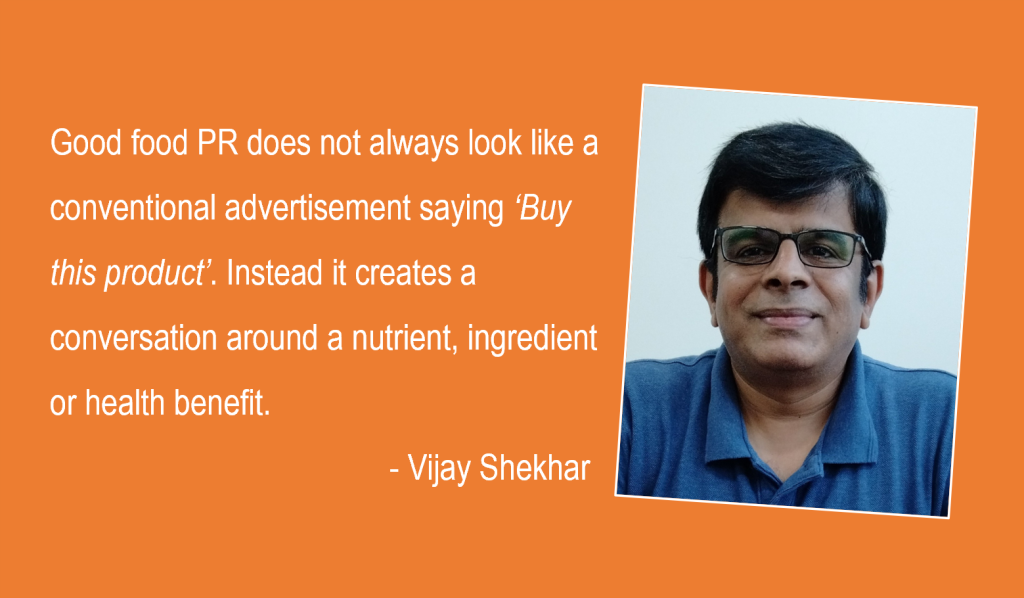
Good food PR does not always look like a conventional advertisement saying ‘Buy this product’. Instead it creates a conversation around a nutrient, ingredient or health benefit. And then that conversation enters newspapers, television, social media, influencer content, restaurant menus and everyday vocabulary.
When consumers repeatedly hear that protein is important, they start looking for protein. When fibre becomes associated with gut health, fibre-rich foods acquire new relevance. When seeds become fashionable, ingredients that were once confined to traditional kitchens suddenly find themselves on premium menus and supermarket shelves.
It is important to note here that the nutritional benefits are not manufactured by PR. The science behind these are absolutely legitimate. What PR does is amplify, simplify and popularise that science. It converts a technical nutritional fact into a consumer-friendly story.
Many a time a food product may contain several beneficial nutrients, but communication often chooses one hero. The rest of the nutritional story quietly supports the main message. And who knows…tomorrow another ingredient or category may take the throne. It could even be something that consumers have never heard of till date. And the fascinating part is that the people at large will rarely or never see the PR machinery behind the trend.
_________________________________________________________________________________________________________________________________
The views and opinions published here belong to the author and do not necessarily reflect the views and opinions of the publisher.

