

For years, hospitality was built around the space. The location, interiors, menu and service were the key markers of a successful venue. Today, those fundamentals still matter, but the guest is looking for more. The new currency is experience.
As the industry evolves, people are not simply choosing where to eat, drink or spend an evening. They are choosing how they want to spend their time. That has changed the way we, as founders, think about building a venue.
An experience starts much before the first order. It starts with the idea. What does the space stand for? What should the guest feel? What makes it different without trying too hard?
These questions have become as important as the menu or interiors.
But there is a risk in this shift. The word “experience” is now used very often. At times, it can become an excuse to add more — more entertainment, more design, more technology, more events. The result can be a space that is busy but lacks character.
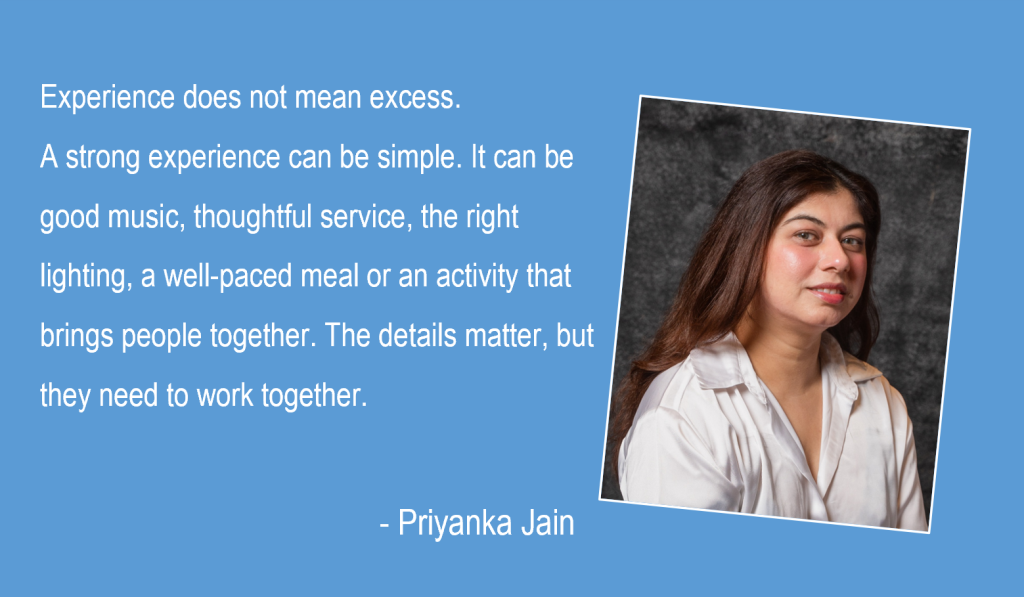
Experience does not mean excess.
A strong experience can be simple. It can be good music, thoughtful service, the right lighting, a well-paced meal or an activity that brings people together. The details matter, but they need to work together.
That balance is becoming harder to achieve.
Consumer attention is short. Trends move quickly. Social media has raised the pressure to create something that can be photographed, filmed and shared. A striking visual can bring people through the door, but it cannot guarantee a good visit.
The real test comes after the photograph.
Is the food consistent? Is the service smooth? Does the music fit the room? Does the team understand the concept? Does the guest want to stay longer? Would they return without another campaign telling them to?
These are operational questions, but they are also experience questions.
This is where the role of a founder becomes more complex. Building an experience is not the responsibility of one team. It needs alignment across design, food, service, marketing, entertainment and operations.
A great concept can fail with poor execution. A modest concept can work when every detail is delivered well.
There is also a commercial reality that cannot be ignored. Experience-led spaces often require greater investment. Events, artists, technology, design changes and new formats come with a cost. Not every idea that creates attention creates value.
For us as an industry, the challenge is to find that balance.
Innovation matters. So does consistency.
Novelty can create a first visit. Consistency can create a second.
I believe the next phase of hospitality will be less about creating the biggest or most elaborate concept and more about creating a clear point of view. Guests are becoming more aware. They can recognise when something feels genuine and when it has been created only for visibility.
The space still matters. The food still matters. The location still matters.
But the experience connects everything.
It is the difference between visiting a place and spending time in a place.
For founders, that means looking beyond the opening. The real measure begins when the initial excitement fades. Can the concept hold its own? Can the team deliver it every day? Can the guest find value beyond the first impression?
Hospitality has always been about making people feel welcome. What is changing is the number of ways we can shape that feeling.
The opportunity is significant, but so is the responsibility.
We are no longer only building spaces.
We are building reasons for people to return.
_________________________________________________________________________________________________________________________________
The views and opinions published here belong to the author and do not necessarily reflect the views and opinions of the publisher.
By Priyanka Jain, Co-Founder & Director, Prasuk Jain Hospitality