

In today’s marketing discussions, “innovation” is a widely used term, though it is not always looked at in depth. It is often included in presentations, brand statements, and campaign plans as an indicator of progress. However, real innovation in marketing is not about language or just introducing new tools. It comes from making practical improvements in how brands understand their audiences, deliver value, and assess results. In that sense, innovation is not a buzzword. It is a discipline.
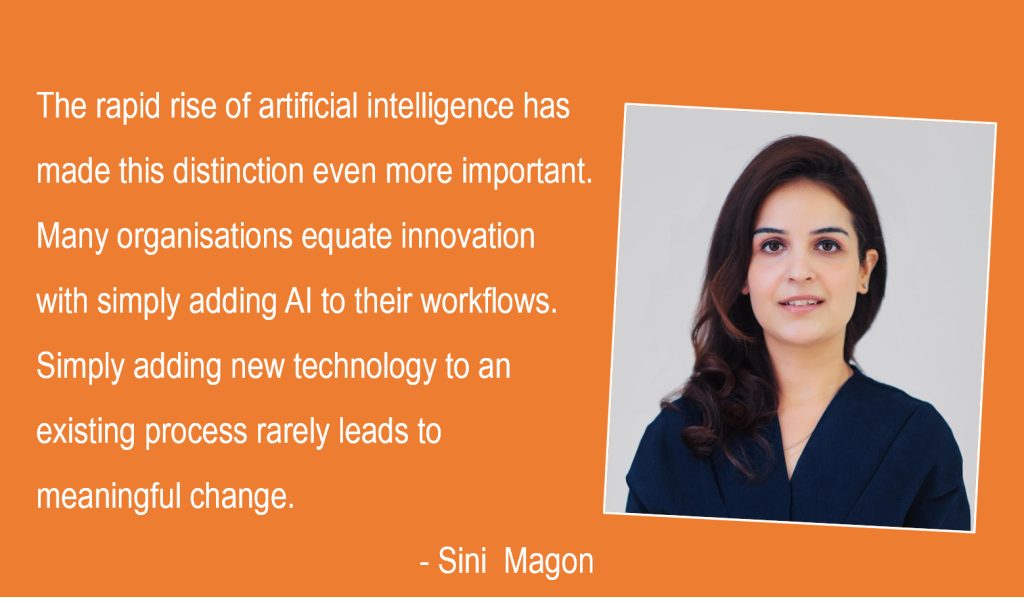
The rapid rise of artificial intelligence has made this distinction even more important. Many organisations equate innovation with simply adding AI to their workflows. Simply adding new technology to an existing process rarely leads to meaningful change. Meaningful progress happens when teams review their working methods, define the problems clearly, and use technology to assist decision making instead of replacing it.
A noticeable shift has been the move from assumption-led marketing to marketing shaped by actual insights. Earlier, campaigns were largely guided by broad demographic data and periodic research. Today, marketers can analyse behavioural patterns, contextual signals, and real-time engagement indicators to understand audiences with far greater precision. This does not mean creativity becomes less important. In fact, it becomes more critical. Data can reveal what people respond to, but it still takes human judgment to decide why it matters and how to act on it in a way that feels authentic.
Innovation also shows itself in how brands approach personalisation. For years, personalisation meant inserting a consumer’s name into an email or recommending products based on past purchases. AI has expanded that possibility into something far more dynamic. Brands can now adjust messaging, timing, format, and channel choice according to individual user behaviour. What truly makes the difference, though, is not the technology alone but the thinking behind how it is used. Personalisation is effective only when it stays relevant, fits the context, and respects user privacy. Without that balance, it risks becoming noise rather than value.
Another area where innovation is being tested is speed. Marketing timelines that once stretched across weeks can now be completed within hours. Trends emerge, gain attention, and fade just as fast. Tools that use data and automation help teams respond more quickly by supplying information, guiding content ideas, and handling routine tasks. However, acting quickly without clear direction can weaken a brand’s identity. Effective teams balance speed with thoughtful decision-making, using smart processes and tools to free up time for planning, storytelling, and testing new ideas.
It is also important to note that innovation is not confined to external campaigns. It also reshapes internal workflows. AI can streamline reporting, optimise media allocation, and forecast performance scenarios, allowing marketers to make decisions with greater confidence. This operational efficiency is often less visible than a viral campaign, yet it is one of the strongest indicators that innovation is truly embedded in an organisation. When teams spend less time compiling data and more time interpreting it, they shift from reactive execution to proactive strategy.
There is also a cultural dimension to innovation that technology alone cannot deliver. Tools can be bought, but the right mindset has to be developed over time. Organisations that see the greatest value from AI tend to foster curiosity, explore new ideas, and collaborate closely across teams. They treat technology as a partner rather than a shortcut. They test, learn, refine, and repeat. In such environments, innovation turns into an ongoing effort instead of a one-time initiative.
Measurement is another area where the idea of innovation is changing. Marketers have long used metrics such as impressions, clicks, and reach, which remain helpful but no longer tell the whole story. With improved tools, brands can link performance data from different platforms and stages of the customer journey to get a clearer view of results. The real benefit comes not from collecting more numbers, but from concentrating on those that help guide better decisions. Useful insight, rather than a large volume of data, supports more effective marketing.
It is worth keeping in mind that innovation does not always mean complexity. Many of the most effective marketing ideas are quite simple. Technology should simplify things, not make them more difficult to understand. When strategies become overloaded with too many tools, dashboards, and technical terms, teams can lose sight of their core purpose of clearly communicating value to people. Brands that stand out are those that use the right tools and expertise to deliver clear, relevant, and timely experiences.
In the coming years, marketing will become increasingly driven by advanced technologies and data-driven strategies. The focus should now shift toward practical application and measurable results rather than mere experimentation. The important question is not whether to adopt it, but how to apply it responsibly and creatively. Marketers who treat it as a tool that supports their thinking, rather than a passing trend, will be in a stronger position to use it well.
In the end, innovation in marketing is not about following every new trend. It is about recognising which changes truly deliver better results for both brands and consumers. It calls for discipline, curiosity, and the readiness to rethink established ways of working. Seen this way, innovation is no longer just a buzzword but a practical approach to improving marketing.
_____________________________________________________________________________________________________
The views and opinions published here belong to the author and do not necessarily reflect the views and opinions of the publisher.