

No brand is immune to crises. A delayed flight, a data breach, a product defect, a social media misfire — in today’s hyper connected world, bad news travels fast. What truly separates successful brands from the rest is not whether a crisis happens — but how they respond to it.
Over the years, I’ve learned that crisis communication isn’t just about damage control. It’s about regaining trust, showing up with empathy, and being human — even when the pressure is on. Let’s break this down into a few simple but powerful truths.
1. Say Something — and Say It Fast
When a crisis strikes, silence can be dangerous. It leaves room for speculation, rumours, and fear. The first rule? Acknowledge the situation.
Even if you don’t have all the answers yet, let your audience know you’re aware, you’re listening, and you’re working on it. A simple message like, “We’re looking into this and will keep you updated,” goes a long way.
People don’t expect perfection — they expect honesty.
2. Speak Like a Human, Not a Policy Manual
When things go wrong, people don’t want jargon. They want clarity, empathy, and real emotion.
Instead of saying, “We regret the inconvenience caused,” say: “We’re truly sorry for the disruption this has caused. We understand how frustrating this must be.”
Put yourself in your customer’s shoes. Would you believe a cold, templated response? Probably not. Tone matters. Keep it human.
3. Put the Leader Out Front — But With the Right Message
In high-stakes moments, people want to hear from leaders — the CEO, the founder, or a trusted face of the brand. But it’s not just about showing up — it’s about what they say and how they say it.
A great leader owns up to the issue, apologizes if needed, explains the steps being taken, and offers hope. Not false promises — but real direction.
4. Transparency Builds Trust — Don’t Hide Behind Half-Truths
One of the biggest mistakes companies make during crises is holding back the full picture. In the age of screenshots, leaks, and viral videos — half-truths get exposed quickly.
If you’ve made a mistake, say it. If you’re still figuring things out, say that too. People value honesty more than polished perfection. Owning your narrative helps prevent others from writing it for you.
5. Actions Speak Louder Than Statements
Words are just the beginning. What you do after the crisis defines whether you come back stronger — or fade away.
- If a service failed — fix
- If customers were hurt — compensate
- If a mistake was made — show how you’re preventing it in the
The best crisis response is follow-through.
6. Don’t Forget Your Internal Audience
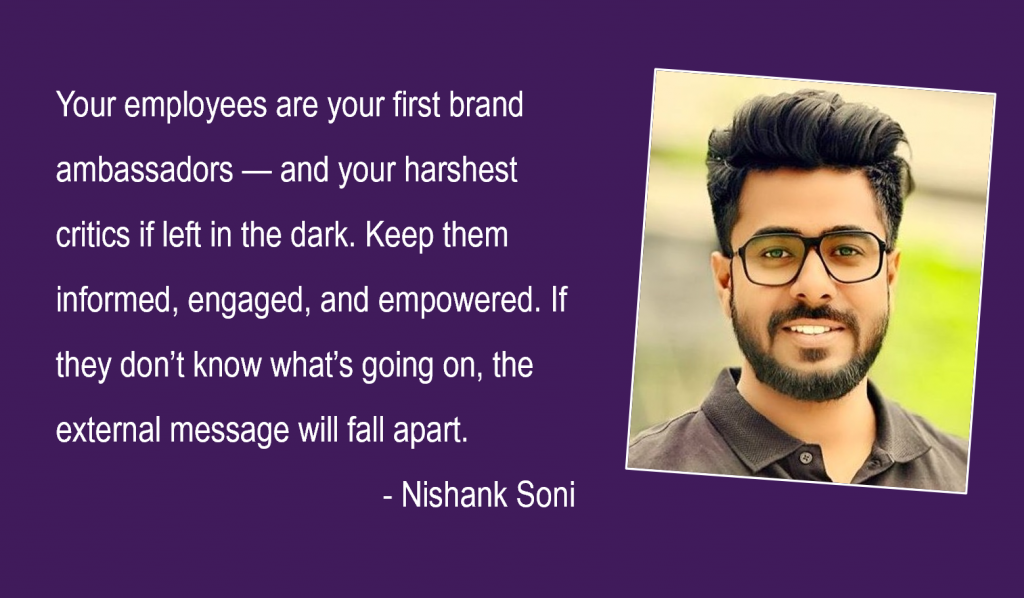
Your employees are your first brand ambassadors — and your harshest critics if left in the dark. Keep them informed, engaged, and empowered. If they don’t know what’s going on, the external message will fall apart.
A quick internal mail, a town hall, or even a WhatsApp update can go a long way.
7. Every Crisis Is a Lesson (If You’re Listening)
After the storm settles, take time to reflect. What went wrong? What worked in your response? What could you have done better?
Build a playbook. Train your teams. Strengthen your response muscle. Because in today’s fast-moving world, resilience is not built during a crisis — it’s built before it.
Final Thoughts
Crisis communication isn’t about spinning a bad story into a good one. It’s about showing up, telling the truth, and doing what’s right — even when it’s hard. And when done right, it can actually strengthen your brand, deepen your customer relationships, and bring your team closer.
Because at the heart of every comeback… is a story well told.
The views and opinions published here belong to the author and do not necessarily reflect the views and opinions of the publisher.

