

That was one of the first pieces of advice I received as a young professional in communications. And for the most part, it served me well. Whether it was sensing the right tone for a CEO statement or predicting how a crisis might unfold, intuition was my secret weapon.
But here’s the truth I’ve come to accept — gut alone is no longer enough.
We are now operating in a world where audience sentiments shift in minutes, algorithms decide reach before editors do, and machine learning models can identify reputational risks before a human comms team even spots a red flag.
This isn’t the age of gut instinct alone. This is the age of gut + graphs.
The Evolution of a Communicator’s Toolkit
Over the past five years, I’ve seen the role of the communications leader expand beyond storytelling. We’re now expected to be part strategist, part technologist, part data analyst— and increasingly, part AI ethicist.
And honestly, it’s uncomfortable at first.
The idea that an algorithm could predict how your message will land feels both fascinating and mildly threatening. But embracing AI tools doesn’t mean abandoning your instincts. It means strengthening them with insight.
Today’s tools can tell you:
- Which words resonate most with your audience.
- What time of day garners the best engagement.
- Which employee sentiment patterns may lead to attrition.
- How a seemingly harmless tweet could escalate into a full-blown PR issue.
Wouldn’t you want to know that?
AI is Not Here to Replace Us. It’s Here to Refine Us.
There’s a narrative floating around that AI will make communicators redundant. I don’t buy that. What AI can do is automate the rote—social media listening, basic content generation, trend detection—and create space for us to do the real work: strategy, creativity, judgment.
In fact, I see AI as a teammate. One that works fast, doesn’t sleep, and is brutally honest with the data. But it still needs direction. It still needs human values, context, and interpretation.
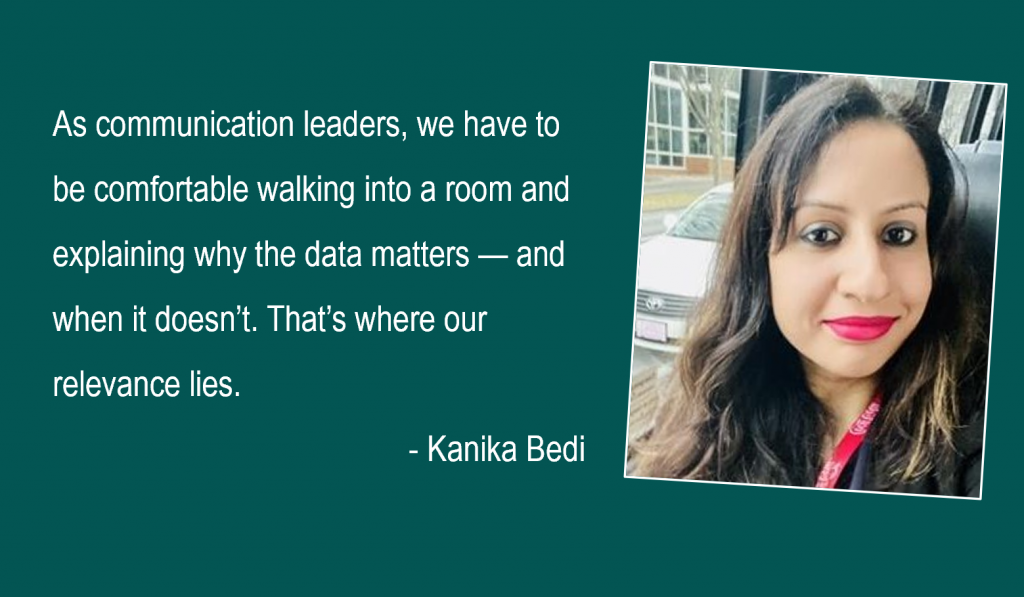
As communication leaders, we have to be comfortable walking into a room and explaining why the data matters — and when it doesn’t. That’s where our relevance lies.
Data Doesn’t Kill Creativity. It Informs It.
Some worry that relying too much on AI will make brand stories bland, robotic, or formulaic. That’s only true if you stop thinking. The best communicators I know use data not to write the story, but to shape it.
For instance, while launching an ESG campaign in a former company, we used sentiment analysis to uncover what themes our audience actually cared about — not what the brand assumed they cared about. The result? Sharper messaging, deeper engagement, and a much more meaningful conversation.
Leading with Both Head and Heart
The future belongs to communication leaders who can balance the heart of storytelling with the head of analytics. Those who can walk the line between intuition and insight, between emotion and evidence.
It’s no longer about choosing one over the other. It’s about becoming fluent in both.
Final Thought
If you’re a senior communicator still relying solely on gut instinct, it’s time to evolve. Not because your experience doesn’t matter — it does. But because the world is changing, fast. And those graphs? They’re not your enemy.
They’re your competitive advantage.
The views and opinions published here belong to the author and do not necessarily reflect the views and opinions of the publisher.

