

For many executives, public relations still conjure up the idea of getting featured on CNN or landing a flattering piece in a business magazine. While that kind of exposure can certainly have value, it’s far from the full picture. The idea that PR is just about media placements and press releases is not only outdated—it’s strategically limiting. Companies stuck in this mindset are playing a short-term game, chasing visibility without understanding how perception actually drives long-term advantage.
Meanwhile, smarter companies are approaching PR in an entirely different way. They see it as a lever for market control—a means of shaping their narrative, influencing decision-makers, and differentiating themselves in an increasingly noisy landscape. They understand that PR is not a megaphone. It’s a steering wheel.
The Shift from Visibility to Strategic Positioning
In today’s environment, PR isn’t just about being seen. It’s about being understood, trusted, and positioned as essential to your category. Winning brands are taking ownership of the conversations that matter—before their competitors do. They’re creating narratives that define categories, influence buyers, attract partners, and even shape investor perspectives.
They’re also building reputations in places that weren’t on the radar five years ago: in AI search results, executive podcasts, talent networks, LinkedIn feeds, and industry analyst reports. PR now spans earned media, owned content, thought leadership, reputation management, crisis readiness, internal communications, and more. It’s no longer a support function—it’s strategic infrastructure.
Consider how a well-positioned startup can attract top-tier customers, close funding rounds, and poach talent from industry giants—all before they’ve spent a dime on advertising. That’s not just luck or timing. That’s PR used strategically.
The CEO Is Now the Chief Communicator
A critical part of this strategy is often underleveraged: the role of the CEO.
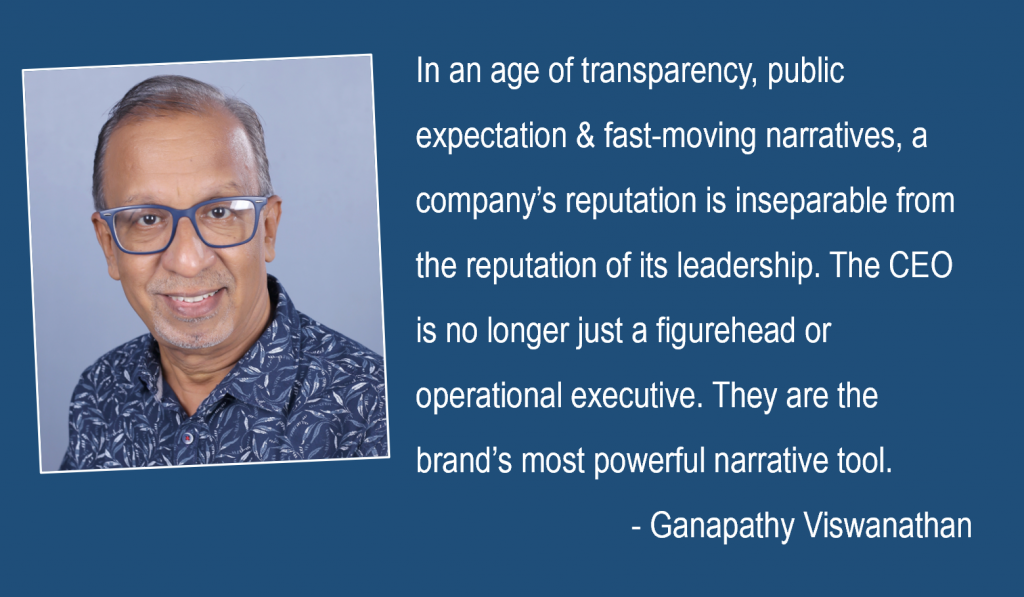
In an age of transparency, public expectation, and fast-moving narratives, a company’s reputation is inseparable from the reputation of its leadership. The CEO is no longer just a figurehead or operational executive—they are the brand’s most powerful narrative tool. Their visibility, credibility, and voice matter more than ever.
Great CEOs understand that leadership today means showing up—not just at investor meetings and earnings calls, but across media, social platforms, industry events, and even internal communications. Whether it’s a high-stakes interview, a 300-character LinkedIn post, or a calm, clear message during a crisis, every word and gesture contributes to how the market perceives the company.
That’s why forward-thinking CEOs work closely with their communications leaders. They’re not just approving talking points—they’re actively shaping them. They understand that their voice isn’t separate from the brand—it is the brand.
Reputation Is Built from the Inside Out
This kind of impact can’t be achieved by treating PR as a separate department or a downstream function. A modern communications strategy must be deeply integrated across the business. It needs buy-in from the C-suite, alignment with company values, and the agility to respond in real time.
When CEOs and comms leaders collaborate closely, they can proactively build trust, credibility, and loyalty—well before any crisis forces their hand. They can turn employees into advocates, customers into believers, and journalists into amplifiers. This kind of cohesion doesn’t just protect reputation. It strengthens it.
Internally, the communication strategy sets the tone for culture. Externally, it defines the brand’s position in the market. In both cases, consistency is key—and that only happens when leadership is directly involved.
Why Smart Companies Are Investing in PR
This isn’t theory. It’s backed by data. The global PR industry is now worth over $129 billion, and it’s growing—not because companies are spending more on press clips, but because they’re recognizing the impact of strategic communications. According to a recent survey, 84% of executives now consult their communications teams on key decisions.
They’re not doing this just to talk about what’s happening—they’re doing it to shape what happens next.
Whether it’s navigating economic uncertainty, managing a rebrand, launching into a new market, or preparing for AI-generated misinformation, comms teams are becoming central to business strategy. The companies that empower them aren’t just protecting their image—they’re expanding their influence.
The Bottom Line
So no, PR isn’t dead. But the old definition of it is. It’s not just about media coverage anymore—it’s about narrative control, reputation leadership, and strategic advantage. It’s how you shape your category, attract top talent, withstand pressure, and lead conversations that matter.
The companies that understand this aren’t just visible—they’re trusted. They don’t just respond to markets—they help define them. And in today’s world, that’s what real leadership looks like.
The views and opinions published here belong to the author and do not necessarily reflect the views and opinions of the publisher.

