

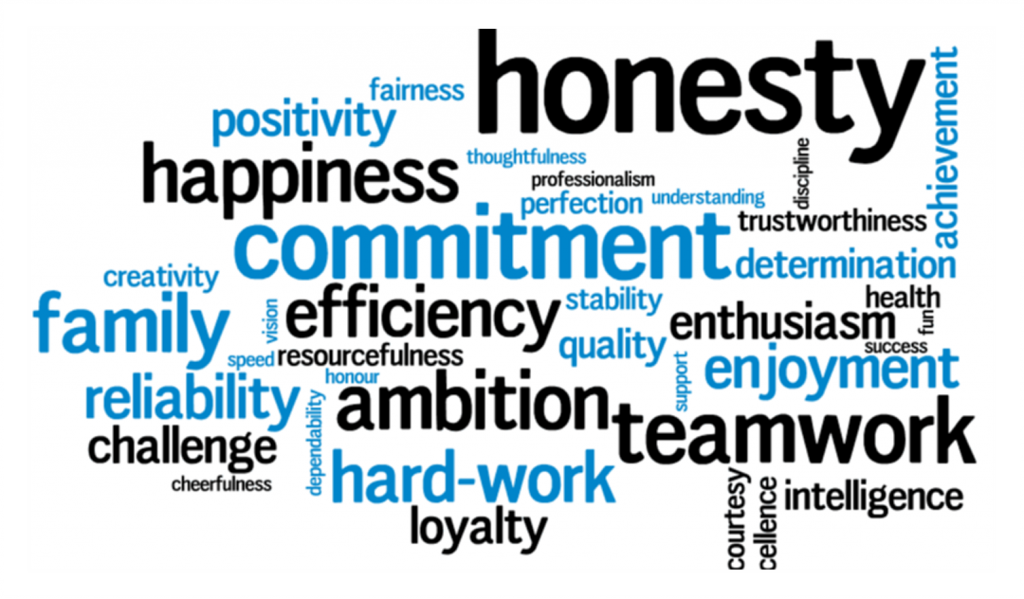
In the pursuit of professional ascendancy, ambition is often celebrated as the fire in the engine—the propulsive force that drives one forward. It is dynamic, visible, and seductive. However, without a sturdy keel beneath the waterline, even the most powerful ship risks capsising in turbulent seas. That keel—often invisible to the onlooker—consists of an individual’s principles, values, and beliefs.
Ambition may ignite motion, but it is principles that set direction, values that govern conduct, and beliefs that sustain momentum when the winds turn unpredictable. For leaders and executives navigating increasingly complex global contexts, understanding this hierarchy is not a philosophical luxury—it is a strategic imperative.
Ambition as the Spark, Not the Compass
Ambition in isolation is like a gust of wind: it can propel you forward, but without navigation it can also carry you into perilous waters. History is littered with examples of leaders who possessed boundless ambition yet lacked the ethical or principled foundation to channel it constructively. Their trajectories often ended abruptly—not for lack of drive, but for lack of depth.
An industry pal once told me, “Ambition got me to the top; my principles kept me from falling off.” The remark captures a truth rarely acknowledged in corporate corridors: the ascent is only half the journey. Sustaining a position of influence requires more than the hunger to climb—it requires the integrity to stand firm when compromise would be easier.
Principles: The Non-Negotiable Coordinates
If leadership were a long-haul voyage, principles are the coordinates you refuse to alter, no matter the lure of shortcuts. They are not reactive to market cycles or swayed by shareholder pressure in the moment. They are the steadfast “no” to expedience when expedience undermines the greater good.
For example, a global CEO I once worked with, refused to engage in aggressive tax minimisation strategies that skirted legal but questionable ethical boundaries. Competitors enjoyed short-term gains; he endured criticism. Yet, a decade later, when regulatory landscapes shifted and public trust became a market differentiator, his company’s brand equity surged. The coordinates he refused to alter had not only guided him ethically—they had positioned his organization advantageously in the long term.
In leadership terms, principles act as the internal gyroscope—ensuring balance and direction even when external forces attempt to destabilise.
Values: The Cultural Currency
While principles define the “non-negotiables,” values are the cultural currency you trade in every day—the lived expression of your principles. If principles are the map, values are the manner in which you travel. They dictate the tone of your interactions, the standards you set for your team, and the decisions you make when multiple paths are available.
Consider values as the soil in which your professional growth takes root. Without rich soil, seeds of ambition may sprout quickly but will wither under strain. For executives, values inform hiring choices, partnership decisions, and the tone of corporate culture.
When Satya Nadella took the helm at Microsoft, he championed empathy as a core value—a decision that reshaped not only the company’s internal culture but also its market relationships. The turnaround was not solely a feat of strategic realignment; it was the outcome of embedding a value deeply into the organisation’s operating system.
For young executives, values are often tested in moments of ambiguity—when data is incomplete, when time is scarce, and when the right decision is not the most profitable one in the short term. In such moments, values are the quiet voice that turns into a competitive advantage over time.
Beliefs: The Unseen Engine
Beliefs are perhaps the most underestimated pillar. They are the deep current beneath the visible waves, shaping thought patterns, influencing resilience, and determining whether one sees obstacles as barriers or as opportunities.
An executive’s beliefs about human potential, the role of business in society, or the inevitability of change shape every strategic choice. Beliefs determine whether a leader inspires followership or merely commands compliance.
I recall coaching a young COO who believed, almost unshakably, that people rise to meet higher expectations when trusted. This belief drove him to delegate strategically, foster autonomy, and celebrate initiative. The results were measurable: higher retention, stronger innovation pipelines, and a team that self-corrected without micromanagement. His ambition might have built his career; his belief system made him a leader others wanted to follow.
Beliefs function like the hidden architecture of a skyscraper—rarely seen, yet the reason the building withstands storms.
The Interplay: Why Ambition Needs Roots
Ambition without principles can lead to opportunism; without values, it risks alienating those whose trust is essential; without beliefs, it crumbles under adversity. The interplay of all four creates the leader who is both aspirational and grounded.
Think of it as a towering tree:
- Ambition is the upward thrust—the visible reach for light.
- Principles are the deep anchoring roots that keep it from toppling in storms.
- Values are the nutrients drawn from the soil, feeding every branch and leaf.
- Beliefs are the genetic code, determining whether the tree bends or breaks when winds shift.
In the Global Context
In today’s interconnected economy, where a decision made in Singapore can impact markets in San Francisco within hours, leaders are under unprecedented scrutiny. Stakeholders—be they investors, employees, or consumers—are more attuned to authenticity than ever before.
For Indian executives, the principle-value-belief framework carries added weight as the nation navigates rapid economic growth, digital transformation, and increasing global influence. In emerging markets, growth often comes with pressure to compromise standards for speed. The leaders who resist this pressure, grounding their ambition in enduring principles, are the ones who set benchmarks for sustainable success.
Similarly, in mature economies, where competition is relentless and innovation cycles are compressed, the differentiator is rarely ambition—everyone at the top is ambitious. The differentiator is the compass that directs that ambition toward impact rather than just personal gain.
Reflection: The True Measure of Growth
The truest measure of a leader’s growth is not how high they have climbed, but how deeply they have remained anchored. Ambition will always be the fire in the furnace, but without the steel frame of principles, the cohesive mortar of values, and the foundational bedrock of beliefs, that fire risks burning the very structure it was meant to propel.
For the C-suite leader and the aspiring executive alike, the question is not “How ambitious am I?” but rather:
- “What principles will I refuse to compromise?”
- “Which values will I live out even when no one is watching?”
- “What beliefs will sustain me when ambition alone cannot?”
Because when the storms come—and they will—it is not the height of your ambition that will keep you standing, but the depth of your roots.
The views and opinions published here belong to the author and do not necessarily reflect the views and opinions of the publisher.

