

Healthcare isn’t just another sector—it’s deeply personal. It’s about people’s lives, their anxieties, their hopes. That’s why it has always been one of the most closely regulated industries. In India, the All-India Medical Council sets strict guidelines on how hospitals, diagnostic companies, and pharmaceutical brands can communicate.
For a long time, this meant healthcare stayed in the background. Marketing was muted, language was clinical, and public engagement was rare. But over the last decade, the story has started to change.
Today, hospitals run awareness campaigns on TV. Doctors use Instagram to share tips about diet and prevention. Pharma companies speak not only about medicines but also about wellness and lifestyle. Patients openly share their recovery journeys, which often inspire thousands of others.
The conversation has shifted from services to stories. From transactions to trust. And at the heart of this shift lies Public Relations (PR). Unlike advertising, PR isn’t about selling—it’s about credibility, reassurance, and building relationships.
Why PR Matters More Than Ever
Think about how families choose a hospital. It’s rarely because of a catchy slogan. They look for reassurance—whether through a trusted doctor’s word, an article they read in the newspaper, or a patient story they heard online.
That’s exactly why PR works. It doesn’t shout. It guides. It uses voices people already trust—journalists, medical experts, patient advocates, and community leaders.
We saw this during the early days of COVID-19. The healthcare brands that earned the most respect weren’t the ones with the biggest ad spends. They were the ones who spoke clearly, addressed fears honestly, and provided practical advice when people needed it most. PR, in those moments, wasn’t about visibility—it was about service.
How PR Builds Trust in Healthcare
The power of PR lies in the way it connects human experience with medical expertise. A few approaches stand out:
Expert voices. A surgeon writing about new advances in heart surgery. A researcher explaining the impact of a breakthrough drug trial in simple language. These don’t just inform—they calm anxieties and build confidence.
Public presence. When doctors and medical leaders appear at conferences, health forums, or local seminars, it shows they’re not just experts in private practice—they’re active contributors to society’s health conversations.
Community education. Free diabetes screening camps. Online workshops about women’s health. Campaigns around early cancer detection. These initiatives don’t feel like marketing; they feel like care. They tell people, “We’re here for you—not only when you’re sick, but to keep you well.”
Transparency. One exaggerated claim can destroy trust in seconds. The brands that earn long-term respect are those that stick to facts, share data openly, and admit uncertainty when it exists. People respect honesty more than perfection.
PR That Humanises Healthcare
Numbers and medical terms can feel distant. PR brings them closer by telling the stories behind them.
A young boy regaining mobility after months of physiotherapy. A scientist who spent years on a breakthrough drug that finally gave patients new hope. A surgeon who went beyond duty to comfort a frightened family.
These are not just press releases—they’re human experiences. And when shared with sensitivity, they remind us that healthcare is not about systems or statistics, but about people.
During the pandemic, one hospital began posting short daily videos where doctors answered common questions—“Should I wear two masks?” “Is it safe to get vaccinated if I have diabetes?” These updates reassured thousands. They weren’t advertisements. They were lifelines of trust.
The Tightrope: Regulation and Responsibility
Of course, PR in healthcare isn’t without challenges. Unlike consumer goods, every word is scrutinised. A single misleading claim can invite not only reputational damage but also legal consequences.
That’s why healthcare PR demands more than creativity—it requires responsibility. Campaigns must inspire, yes, but they must also stay ethical, compliant, and truthful. Walking this line is what makes healthcare PR a specialised craft.
Looking Ahead: The Future of Healthcare PR
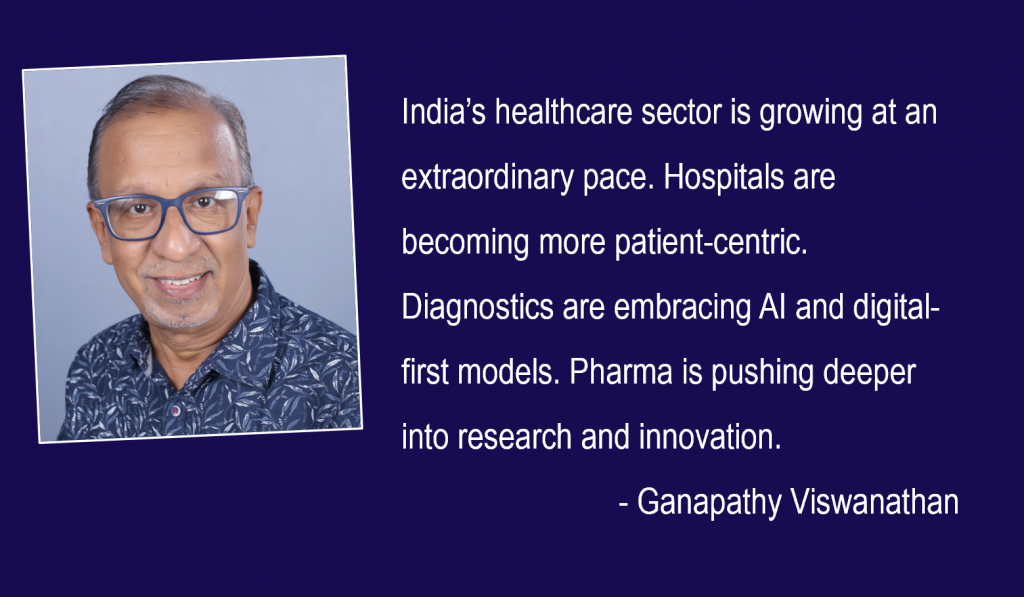
India’s healthcare sector is growing at an extraordinary pace. Hospitals are becoming more patient-centric. Diagnostics are embracing AI and digital-first models. Pharma is pushing deeper into research and innovation.
In such a competitive space, communication will be the differentiator. The brands that thrive will be those that speak with empathy, authority, and authenticity.
The platforms may change—today it’s webinars and health podcasts; tomorrow it may be AI-powered assistants or virtual health communities. But the foundation won’t change. Trust will always be the real currency of healthcare PR.
Closing Thought
At its heart, healthcare is about people. And PR, when done right, is also about people. It’s not a luxury or an add-on. It’s the bridge between medical expertise and public understanding, between research and real lives.
For healthcare brands, strong PR can be the difference between being seen as just another provider—or being trusted as a partner in someone’s health journey.
When built on honesty and empathy, PR doesn’t just shape perception. It educates. It reassures. It inspires. And in healthcare, that can make all the difference.
The views and opinions published here belong to the author and do not necessarily reflect the views and opinions of the publisher.

