

Business development is often misunderstood. It is spoken about as a front-end function, visible, energetic and deal-driven, when in reality most of the work happens quietly and over time. Growth rarely comes from a single pitch or presentation. It comes from persistence, judgement and the discipline to do what was promised long after the meeting is over.
Those who step into business development expecting glamour usually discover something else instead: an uphill role that demands patience, credibility, and a willingness to stay invisible when things are working well.
Networks Are Built Before They Are Needed
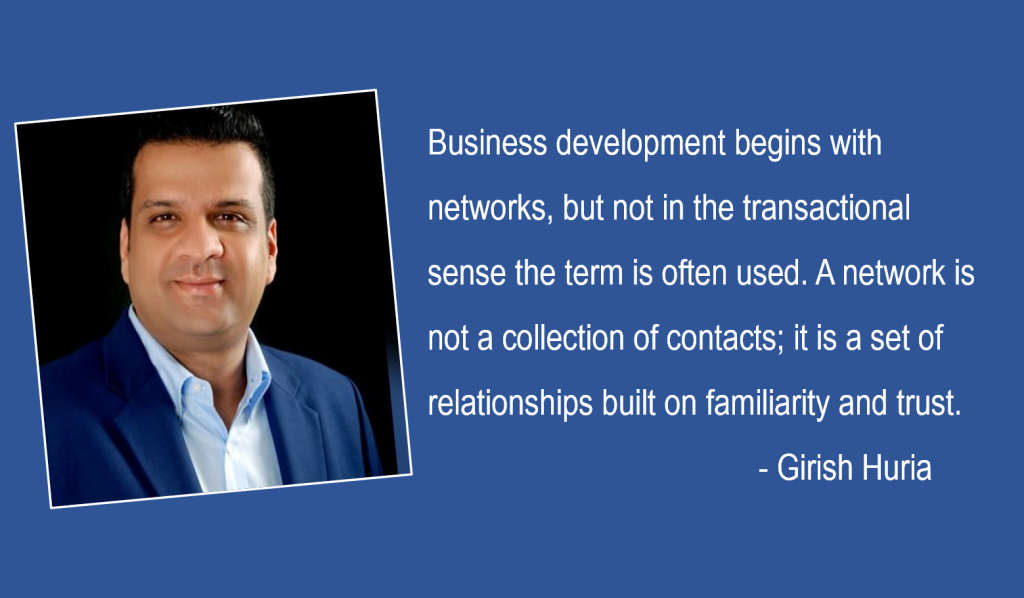
Business development begins with networks, but not in the transactional sense the term is often used. A network is not a collection of contacts; it is a set of relationships built on familiarity and trust. The most meaningful opportunities tend to emerge from conversations that have no immediate agenda.
Over time, it becomes clear that listening matters more than speaking, and consistency matters more than reach. Relationships built slowly tend to hold when circumstances change. Those built only for opportunity rarely do.
Trust Is the Only Currency That Compounds
If business development had to be reduced to one principle, it would be trust. Deals do not close because presentations are polished; they close because people believe delivery will follow commitment.
Trust is rarely built in formal settings alone. It is built through small actions, such as responding when things are difficult, following through on minor commitments, and staying present even when a deal does not materialise. Unlike targets or pipelines, trust compounds quietly. Once lost, it is expensive to rebuild.
Winning is Only Half the Work
Securing a mandate is not the end of the process. In many ways, it is the easier part. The real test begins after the agreement is signed.
Quality of delivery determines whether growth is sustained or temporary. Shortcuts may help meet a number in the short term, but they weaken credibility over time. In business development, reputation travels faster than success stories. Protecting quality is not idealism; it is risk management.
Adaptability Is Not Optional
There is no fixed formula for business development. Markets behave differently. Clients operate under different pressures. Some situations require patience and alignment; others demand speed and decisiveness.
Adaptability becomes less a skill and more a requirement. Those who succeed are usually the ones who adjust their approach without compromising their standards, changing how they engage, not what they stand for.
Follow-Through Is the Quiet Differentiator
Promises are easy to make. Follow-through is not. What separates effective business development from average performance is rarely strategy; it is execution discipline. Sending information when promised. Closing loops without reminders. Keeping stakeholders informed even when there is nothing new to report.
These actions rarely draw attention, but they shape perception. Eventually, they become the reason people return.
Why Business Development Remains an Uphill Role
Business development demands resilience when conversations stall, patience when relationships take years to convert, and clarity when plans change direction. It is not linear work, and progress is often invisible until it isn’t.
Organisations that treat business development as a short-term function tend to struggle with retention and trust. Those that see it as a long-term investment, rooted in credibility, delivery, and consistency, tend to build growth that lasts.
At its core, business development is not about winning deals. It is about earning confidence, repeatedly, and protecting it through the work that follows.
_____________________________________________________________________________________________
The views and opinions published here belong to the author and do not necessarily reflect the views and opinions of the publisher.