

In today’s swipe-driven world, short-form content has emerged as a cultural powerhouse. Platforms like TikTok, Instagram Reels, YouTube Shorts and Snapchat Stories have reshaped how people consume media, share ideas, and participate in global conversations. What began as quick entertainment tailored to shrinking attention spans has evolved into one of the most influential tools for storytelling, trendsetting, and cultural exchange.
At its heart, short-form content is a product of the attention economy. With audiences spending just seconds on a post, creators are forced to deliver sharp, emotional and impactful narratives. Brevity has not diluted storytelling—it has sharpened it. A 15-second clip today can entertain, provoke thought, or spark curiosity faster than traditional formats. But the true strength of this format lies in its accessibility. Anyone with a smartphone can become a creator. This democratisation has broken traditional media hierarchies, opening doors for diverse voices. Viral movements no longer begin with celebrities or global brands; they often start with ordinary individuals. A teenager’s dance routine, a regional recipe or a quirky meme can capture global imagination overnight. But this speed also raises questions of sustainability, as ideas peak and fade within days.
In India, the impact is especially visible. Creators from rural and semi-urban regions are bringing dialects, traditions and humour—long overlooked by mainstream media—into the limelight. A farmer sharing his daily routine, an artisan showcasing her craft, or a local cook demonstrating indigenous recipes can now reach millions. These snippets act as cultural snapshots, bridging the urban-rural divide not through policy but through pixels. And the ripple effect extends beyond the digital world. Music labels increasingly produce tracks with “viral moments” designed to trend on reels. Fashion brands now launch collections via influencer-led shorts. Skincare hacks, fitness routines and DIY tips gain popularity through bite-sized, relatable storytelling. Authenticity often matters more than polish, with simple, personal content resonating more deeply than glossy campaigns. For brands, this shift has been transformative. Traditional advertising models are giving way to influencer-led storytelling that feels personal and engaging. The metrics of success have changed: engagement and shareability matter more than reach and frequency. In some cases, a single viral reel can outperform a multimillion television campaign.
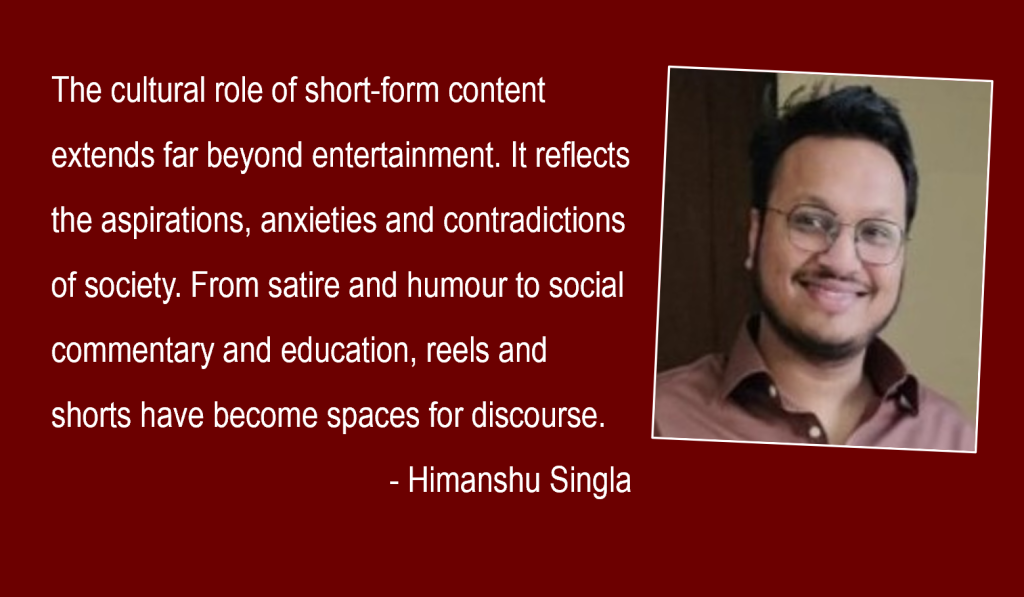
The cultural role of short-form content extends far beyond entertainment. It reflects the aspirations, anxieties and contradictions of society. From satire and humour to social commentary and education, reels and shorts have become spaces for discourse. Increasingly, they are tools for civic engagement as well. During elections, protests and public health crises, creators have used these platforms to spread information, combat misinformation, and mobilise communities. Their immediacy and virality make them powerful tools for grassroots activism. This participatory culture is also redefining the relationship between audiences, creators and brands. Viewers are no longer passive consumers. By remixing trends, adding personal spins and amplifying ideas, they actively shape narratives, giving content a life beyond its origin. Influence itself has become fluid, shifting from individuals to communities.
Yet, the short-form boom comes with hard questions. Does the endless churn of content promote novelty at the cost of depth? Can the rapid pace of trend-making sustain itself without exhausting both creators and audiences? While the platforms encourage creativity, they also risk prioritising fleeting engagement over long-term value. Striking a balance between instant consumption and meaningful impact remains the industry’s biggest challenge.
Still, the rise of short-form content is undeniable. It has amplified marginalised voices, given everyday creators global reach, forced brands to rethink communication, and turned seconds-long clips into cultural milestones. In today’s world, the reel is not just entertainment—it is a mirror, a tool for influence, and a driver of change. As the world continues to scroll, the real task lies beyond chasing the next viral hit. It is about recognising short-form content as more than disposable media—as cultural artefacts of our time. Because in this new era of communication, the reel is real, and it is rewriting the rules of influence, one swipe at a time.
The views and opinions published here belong to the author and do not necessarily reflect the views and opinions of the publisher.

