

As AI takes over workplace communication, what becomes rarer—and more valuable—is the signal that a human being was truly present and thinking. Leaders who understand this will not just communicate better; they will lead differently.
Part 1 of this series showed how the inbox has long been documenting a quiet distortion in organisational life — one where visibility masquerades as productivity, and speed stands in for competence. AI did not create this pattern. But it has the potential to entrench it. This second part examines what that means, and what leaders can do about it.
Three layers, and why only one matters long term
To see the full picture, it helps to separate what workplace communication is actually doing at any given moment. There are three layers operating simultaneously:
- Speed — the movement of information and the closing of loops.
- Signal — what communication conveys about the sender.
- Substance — the clarity of thinking and the quality of decisions.
The challenge is structural. Modern professional life rewards speed and signal loudly and immediately. Substance accumulates quietly and is often invisible until it is absent. AI is already excellent at speed. It is rapidly improving at signal. Substance — the only layer that compounds into genuine influence — still depends on a human being paying attention and doing the harder thinking.
When speed dominates without substance, work accelerates without advancing. When signal replaces substance, communication becomes a performance rather than a contribution.
The inbox has been documenting this tension for years. Most organisations have not been paying attention to what it was saying.
The unexpected advantage of being human
Something counterintuitive is beginning to emerge as AI-generated communication becomes the professional standard. The more uniform and polished correspondence becomes, the more a message that feels genuinely considered stands out. Not because it is longer or more formal, but because it feels like someone was present when they wrote it.
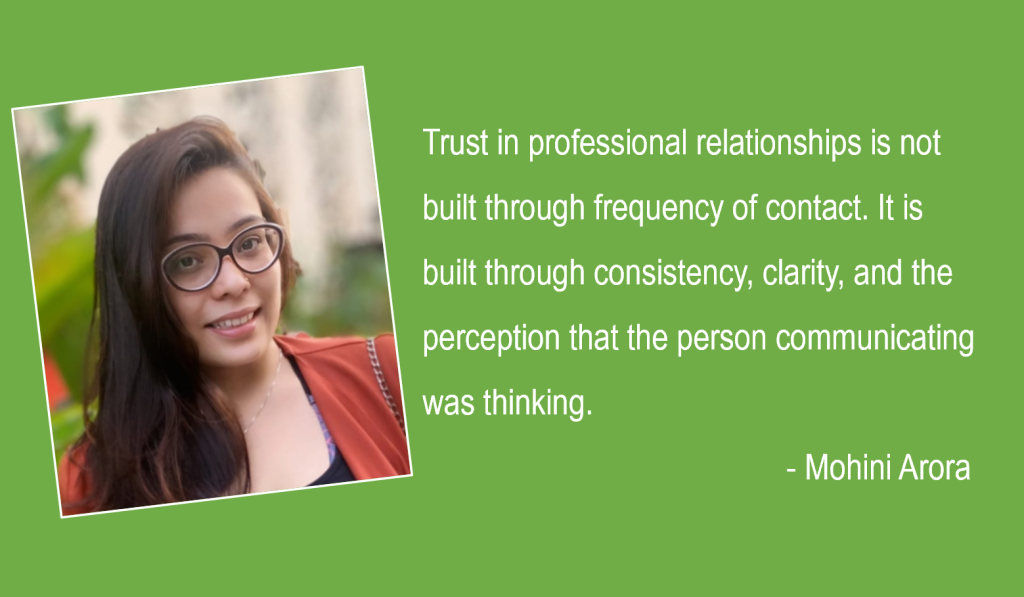
Trust in professional relationships is not built through frequency of contact. It is built through consistency, clarity, and the perception that the person communicating was thinking. A slightly imperfect message written with real attention will outperform a flawlessly structured one that could have been written for anyone. People sense this distinction even when they cannot articulate it.
This is what the inbox has been signalling all along. Not everything marked urgent is important. Not every thread needs another reply. Not every situation belongs in writing. The leaders who understood this were not being inefficient. They were exercising judgement.
What to do with this
The argument here is not against using AI in communication. These tools are too capable and too embedded in how organisations operate to dismiss. The argument is for using them with enough self-awareness to know what they are replacing and whether that replacement is actually an improvement.
A useful starting point: spend 20 minutes reading your sent folder not as a record of tasks completed but as a behavioural profile. Ask what it reveals about where attention actually goes. Ask which messages reflect genuine thought and which reflect the path of least resistance. Ask how many of them needed to exist at all.
The patterns are already there.
Conclusion
AI will keep improving. The speed will increase. The polish will become indistinguishable from the real thing.
But the differentiator will not be speed or polish. It will be judgement.
In a world of automated communication, the people who stand out will be those who remain deliberate; who know when to respond, when to pause, and when not to outsource the moment.
The strongest signal you send is not how quickly you reply. It is whether you were thinking when you did.
Continued from Part 1: Your inbox knows more about how you lead than you think

