

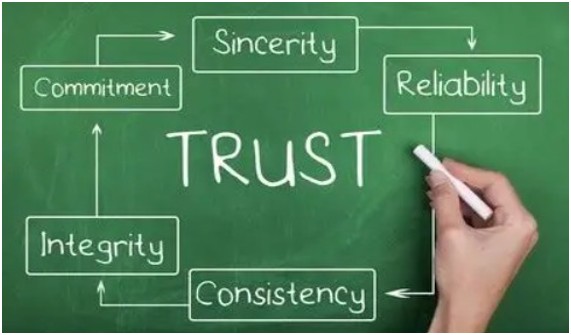
I have been thinking of a world in which even water becomes so abundant that its availability ceases to confer advantage. In such a world, value would migrate elsewhere, perhaps to purity, provenance, or trustworthiness. Information is undergoing a similar transformation. What was once scarce has become ubiquitous. What was once coveted is now incessantly available. Knowledge no longer travels in measured streams but arrives in torrential cascades, flooding in boxes, dashboards, social feeds, podcasts, newsletters, webinars, reports, and increasingly, the outputs of generative artificial intelligence.
Yet amid this unprecedented abundance, organizations are confronting a paradox that few leadership frameworks adequately address. The contemporary enterprise is not suffering from an information deficit. It is suffering from a discernment deficit. The defining challenge for leaders is no longer access to insight. It is the capacity to distinguish signal from noise, wisdom from verbosity, and judgment from mere intellectual activity. In boardrooms, executive committees, and leadership teams across industries, an uncomfortable reality is emerging. The individuals who command the greatest influence are often not those who possess the most information. They are those whose words have become trusted instruments of interpretation.
This distinction is far more consequential than it first appears. In my view, one of the most undervalued leadership capabilities of the coming decade will be the ability to function as a trusted source. Not a source of constant commentary. Not a source of perpetual ideation. Rather, a source whose contributions consistently reduce ambiguity, elevate collective thinking, and create strategic coherence.
Let me break this down into 3 parts –
The Undiscussed Cost of Executive Cognitive Externalities
One of the least examined yet most pervasive forms of organizational inefficiency is what might be termed executive cognitive externality. I observe that quite a few senior leaders are celebrated for their intellectual fecundity. They are voracious consumers of ideas, relentless pattern seekers, and perpetual explorers of emerging possibilities. Such qualities are often associated with visionary leadership. However, there exists a point at which intellectual abundance becomes organizational turbulence.
Every thought expressed by a senior executive enters a vastly different ecosystem than it would if uttered by anyone else.An executive may perceive themselves as merely speculating, brainstorming, or thinking aloud. Their teams, however, frequently interpret those same utterances as embryonic strategy. Resources are mobilized. Discussions proliferate. Analysis begins. Existing priorities are quietly displaced. Attention migrates toward possibilities that may never materialize.
The cumulative effect is rarely visible on a balance sheet. Yet its impact can be profound.Organizations lose not only time but also cognitive bandwidth. The scarce commodity being depleted is not labor. It is focus.
The most effective leaders I have encountered exhibit an uncommon form of discipline. They practice intellectual filtration before intellectual dissemination. They understand that leadership is not the unrestricted transmission of thought. It is the judicious curation of thought.
This distinction is subtle yet transformational. A leader’s obligation is not merely to generate ideas. It is to determine which ideas merit occupying the finite mental real estate of the organization. Such restraint requires a level of self-governance that is far rarer than creativity itself.
Indeed, one of the hallmarks of executive maturity is recognizing that every thought need not become a conversation, and every conversation need not become an initiative. The leaders who become trusted sources are often distinguished not by the quantity of their ideas but by the rigor with which they withhold them until they are sufficiently formed to create value.
The Strategic Power of Epistemic Humility
A second dimension of trusted leadership receives remarkably little attention in executive discourse. It is the capacity to demonstrate epistemic humility. Modern leadership culture often rewards the appearance of certainty. Investors seek confidence. Teams seek direction. Boards seek conviction. Consequently, many executives feel compelled to project omniscience even when navigating terrain characterized by ambiguity, volatility, and incomplete information.
This impulse is understandable. It is also increasingly dangerous. The contemporary business environment is too complex to permit intellectual absolutism. Market dynamics evolve unpredictably. Technological discontinuities emerge without warning. Consumer behavior mutates faster than institutional assumptions can adapt.
In such conditions, certainty can become a liability masquerading as strength. The most credible leaders I know possess an unusual comfort with incompleteness. They distinguish meticulously between evidence and inference, between conviction and conjecture, between established knowledge and evolving understanding. They resist the temptation to manufacture confidence simply because their position appears to demand it. This practice generates a powerful yet often overlooked effect. When leaders openly acknowledge the limits of their knowledge, they paradoxically strengthen their credibility. People become more inclined to trust future assertions because they no longer perceive communication as performative. They perceive it as authentic.
Trust emerges not from infallibility but from intellectual integrity. A leader who declares, something like “I do not yet know,” is often demonstrating greater strategic sophistication than one who rushes to provide a convenient answer. Such admissions signal that the pursuit of truth has taken precedence over the preservation of ego.
In an era increasingly characterized by synthetic expertise and algorithmically generated confidence, genuine humility may become one of leadership’s most potent differentiators. The trusted source is not the individual who appears certain about everything. It is the individual whose relationship with truth remains uncompromised by the desire to appear knowledgeable.
The Ascendancy of Signal Prestige Over Visibility
Perhaps the most profound shift underway concerns the changing economics of attention. For decades, professional success has been intertwined with visibility. Leaders were encouraged to communicate frequently, maintain relevance, cultivate personal brands, and occupy as much attention as possible. The implicit assumption was straightforward. Visibility creates influence.
I suspect this assumption is becoming increasingly obsolete. As information ecosystems become more congested, audiences are developing sophisticated mechanisms of filtration. People no longer evaluate sources merely on prominence. They evaluate them on reliability. This evolution represents a significant inflection point in leadership.
The emerging premium is no longer visibility. It is signal prestige. Signal prestige refers to the degree to which a person’s communication is perceived as consistently valuable relative to its frequency. It is the reputational consequence of sustained judgment. Leaders with high signal prestige enjoy a remarkable advantage. Their words command attention before they are spoken. Their perspectives receive consideration before they are defended. Their recommendations are examined with seriousness because prior experience has conditioned others to expect substance.
This phenomenon cannot be manufactured through branding exercises or communication workshops alone. It is accumulated through years of discernment. Every interaction either compounds or diminishes this reservoir of trust. Every opinion expressed, every decision justified, every prediction offered, and every uncertainty acknowledged contributes to a leader’s credibility ledger.
Over time, individuals develop an unmistakable signal profile. Some become known for frequency. Others become known for accuracy.
And well, in my understanding of whatever limited knowledge I have around history, it suggests that the latter category ultimately exercises greater influence. As artificial intelligence continues to commoditize information production, content itself will become increasingly abundant and increasingly interchangeable. What will remain scarce is judgment. What will remain valuable is discernment. What will remain influential is trust.
This reality carries profound implications for the future of leadership. The executives who thrive in the coming decade will not necessarily be those with access to the most sophisticated technologies, the largest data repositories, or the loudest platforms. They will be those who cultivate reputations as trustworthy interpreters of complexity. Their presence will function as a stabilizing force amid uncertainty. Their words will reduce confusion rather than contribute to it. Their judgments will possess gravitas because they have been forged through reflection rather than reaction.
Ultimately, becoming a trusted source is not a communication competency. It is an ethical discipline. It reflects how seriously a leader regards the attention, confidence, and cognitive energy of others. In an age defined by informational excess and cognitive saturation, trust is becoming the ultimate leadership arbitrage. Those who learn to steward it wisely will discover that influence no longer needs to be pursued. It arrives as the natural consequence of judgment consistently exercised with wisdom, restraint, and intellectual integrity.
___________________________________________________________________________________
The views and opinions published here belong to the author and do not necessarily reflect the views and opinions of the publisher.

