

People were starting to talk about artificial intelligence in their daily work instead of just in boardrooms a few years ago, just after the pandemic. During the years of lockdown, people in all areas had to rethink how they handled their jobs. This included people who worked in public relations. PR businesses that used to simply rely on personal relationships, talking to the press, and producing content by hand suddenly had to learn how to use new digital technology to keep up with the fast-changing times.
During one of these conversations with a senior PR professional, he informed me that his team had begun using several AI-based tools to keep track of news stories, manage client accounts, and compose the first drafts of press releases. Back then, it sounded like a test. It happens a lot now. It’s no longer a question of whether PR firms use AI; it’s a question of whether this reliance on technology has helped or damaged creativity, honesty, and strategic thinking.
The New Face of PR Work
In the past, PR work was largely about learning about a client’s narrative, making a strong message, and figuring out the best ways to get it across. It was hard work to do research, write, and talk to clients, but they were also incredibly human things to do. AI has changed that pace in a big way.
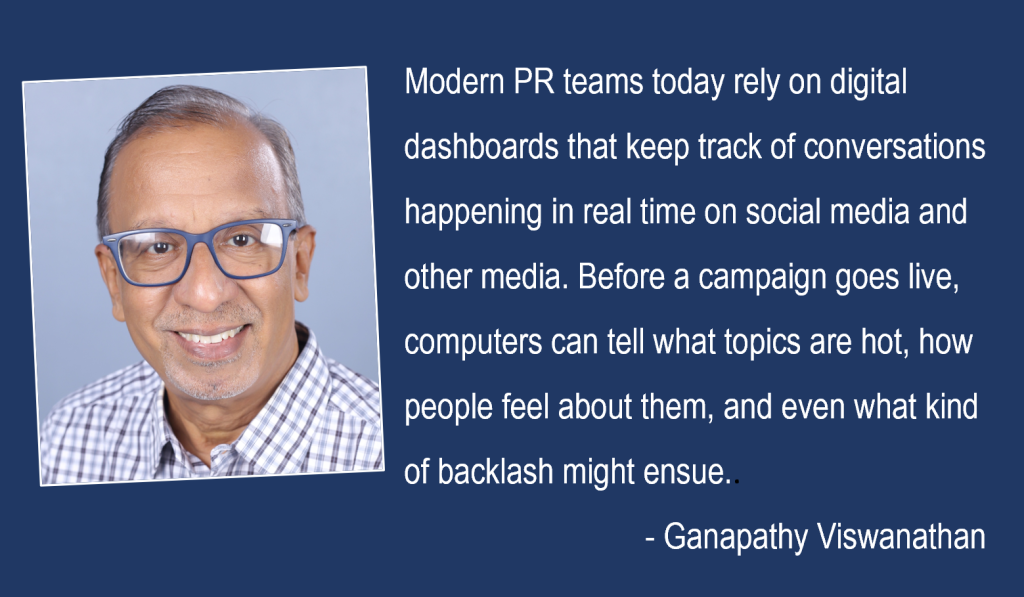
Modern PR teams today rely on digital dashboards that keep track of conversations happening in real time on social media and other media. Before a campaign goes live, computers can tell what topics are hot, how people feel about them, and even what kind of backlash might ensue. AI tools are becoming an undetectable element of every public relations professional’s toolkit. They may do everything from coming up with the best headlines to arranging posts on social media.
There’s little doubt that this move has made things run more smoothly. You can now monitor coverage, write reports, or browse through data in minutes instead of days. Consultancies can respond to breaking news more rapidly, develop content that meets the demands of their audience, and serve more than one consumer more accurately. AI has become a good friend in that way.
The Creative Challenge
But the fact that automation is so easy has also made its own set of creative obstacles. Telling stories has always been a big part of good public relations work. This entails understanding the emotional core of a business and telling a tale that sounds true. When AI publishes press releases or posts on social media, it can sometimes easily miss that nuance.
Many professionals argue that machines now write the first manuscript, which is then enhanced by human editors. This saves time, but it could also mean that the content seems fantastic but doesn’t have much substance. The issue is depending on it too much. When convenience replaces innovation, campaigns start to feel like the same old thing.
People operate PR, which is a business at its core. It thrives on intuition, empathy, and building relationship, things that no algorithm can do flawlessly. Others still need to be sensitive and culturally aware to send a message that connects with others on an emotional level.
Being more authentic in a day of machines
Communicators are also getting more concerned about authenticity. As AI systems make more and more content, it gets harder to tell the difference between what individuals say and what machines say. This can be a dangerous slope in public relations when trust is vital.
If a brand’s messaging is overly vague, it could sound robotic or, even worse, false. People are pickier than ever these days; they can tell when communication isn’t personal. This is where PR professionals need to step up and make sure that AI stays a tool and not a writer. Every piece of communication should still sound like the brand and not like a computer-generated draft with no personality and that emotional touch.
A Tool, not a Replacement
It’s apparent that AI is currently the most important tool for PR businesses. It helps consultancies remain ahead of the competition by keeping an eye on the news, looking at trends, talking to each other during a crisis, and measuring how well they are performing. It’s also important to remember that technology can’t replace the ability to think strategically, show empathy, or make decisions.
The best PR teams use AI to handle things that are repetitive and need a lot of data so their team can focus on what truly matters: building relationships, telling stories, and coming up with new ideas. AI can actually help you be more creative by giving you more time and ideas that lead to new ones when used properly. It turns into a collaborator instead of an opponent.
What’s Next on the Road Ahead?
The next generation of AI in public relations is already starting to take shape. Consultancies can utilise predictive analytics to find out what media trends are on the way and plan campaigns around them. Emotion sensing algorithms can determine how people are feeling online and help you adjust your message right away. Hyper-personalisation helps marketers send messages to certain journalists or influencers, which makes communication much more focused than it has ever been.
Also, audio and video technology is moving very quickly. Consultancies may soon be able to use realistic AI avatars to generate brand spokespeople or instructional videos that look the same every time without having to organise physical sessions. These new concepts are interesting, but they will also raise new moral and creative questions. How much automation is too much? When does a person stop talking and a machine start talking?
Finding the Right Balance
Ultimately, the impact of AI on PR firms is contingent upon its use. When utilised as a shortcut, it can make creativity, honesty, and human intuition weaker. AI may be a strong tool that makes things operate more smoothly, provides professionals better insights, and helps them find better ways to talk to each other, provided you approach it like a partner.
In the future, PR won’t be about choosing between people and machines; it will be about finding the right balance between the two. The best consultancies will be the ones that will leverage and use data with empathy, automation with new ideas, and technology with trust.
AI isn’t a menace or a savior in the end. It’s a smart tool that might either make look public relations better or convert it into a formula. The people who utilise it always get to select.
The views and opinions published here belong to the author and do not necessarily reflect the views and opinions of the publisher.

