

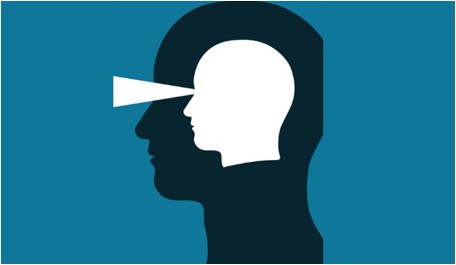
Quite a few seasoned leaders I work with has one thing in common. They don’t doubt their intelligence, experience, or intent. What they quietly wrestle with is this:
“What am I not seeing about myself that everyone else already knows?”
That invisible gap, between how we experience ourselves and how the world experiences us is the true blind spot. And at senior levels, blind spots don’t stay personal. They quietly shape culture, performance, decisions, and legacy. Blind spots are not failures of intellect. They are side effects of success, power, speed, and certainty.
Here is a first-of-its-kind Blind Spot Diagnostic Framework for CXOs, built on neuroscience, emotional maturity, and behavioral systems. These five dimensions reveal where leaders most often lose self-visibility and how to regain it.
- The Certainty Trap: When Confidence Blocks Perception
Experience is a gift, however, if unchecked, experience becomes cognitive automation. The brain’s predictive circuitry begins to shortcut inquiry in favor of speed. The more successful the leader, the faster these shortcuts form. What once was wisdom turns into unconscious patterning.
This creates the Certainty Trap:
- You stop testing assumptions
- You interpret challenge as resistance
- You mistake familiarity for truth
Neurologically, this happens when the brain’s error-detection system (anterior cingulate cortex) becomes underutilized. You literally stop noticing contradictions.
Blind spot signal:
You hear yourself saying:
“I’ve seen this before.”
“This is how it always works.”
“I already know where this is headed.”
Unlocking practice:
Replace statements with inquiries:
- “What’s different this time?”
- “What would disconfirm my position?”
- “Who here sees this differently?”
Certainty feels powerful. Curiosity keeps you accurate.
- The Authority Distortion: Power Quietly Warps Feedback
At CXO levels, honesty may begin to thin out.
Not because people want to deceive you—
But because careers, incentives, and reputations now move around your reactions.
This creates Authority Distortion:
- Polished updates replace raw truth
- Discomfort gets edited out of conversations
- Innovation becomes safer than honest
Over time, leaders don’t become misinformed. They become under-informed by politeness.
Blind spot signal:
You sense agreement too quickly.
Meetings move smoothly—but outcomes stagnate.
Surprises appear “out of nowhere.”
The brain interprets agreement as safety—even when it’s dysfunctional.
- Invited Dissent Rituals: Engineering Disagreement Into the System
Here is where most leaders intellectually agree—but operationally fail.
They say they welcome disagreement.But they don’t ritualize protection for it.
That’s where Invited Dissent Rituals come in.These are formally protected contradiction practices that remove social risk from truth-telling.
Example of an Invited Dissent Ritual (Boardroom-Ready):
At the end of every strategic decision:
- One rotating leader is assigned the “Opposing Architect” role.
- Their job is to construct the strongest possible argument against the group’s direction.
- This role is formally rewarded, not punished.
- The group must pause and respond—not defend.
No consequences.N o reputational penalty.Only structural permission to disagree.
This ritual activates:
- Cognitive diversity
- Error detection
- Emotional maturity
- Strategic resilience
Blind spot signal this corrects:
When “alignment” starts replacing “thinking.” Dissent isn’t disloyalty. It’s a system upgrade for truth.
- The Emotional Signature Blind Spot: How Your Nervous System Becomes the Culture
Every leader broadcasts an emotional signature,a default nervous system tone.
Some broadcast:
- Urgency
- Tension
- Performance anxiety
Others broadcast:
- Stability
- Safety
- Presence
Teams don’t copy strategy. They copy emotional posture.
Neuroscience shows that mirror neurons synchronize emotional states faster than logic can intervene.
This means:
Your stress becomes organizational stress. Your calm becomes operational calm.
Blind spot signal:
You feel driven.Your team feels pressured.
You feel decisive.
Your team feels unsafe to question.
Unlocking practice:
Before important meetings, perform a nervous system reset:
- Slow breath pacing
- Muscle relaxation
- Internal state check: “Am I regulated or reactive?”
Your emotional maturity doesn’t stay internal.
It becomes the climate system of your leadership ecosystem.
- The Identity Blind Spot: When Role Replaces Self-Awareness
The final and most dangerous blind spot is identity fusion.
When leaders unconsciously merge:
- Who they are
- With what they do
- With how they are perceived
This creates:
- Defensiveness during feedback
- Insecurity masked as authority
- Inability to separate worth from performance
Neuroscience maps this to hyperactivity in the brain’s default mode network—the ego narrative loop that constantly protects self-image.
Blind spot signal:
Feedback feels personal—even when it’s strategic.
You explain rather than explore.
Unlocking shift:
From:
“I am my role.”
To:
“I steward this role.”
Emotionally mature leaders do not abandon power.
They decouple identity from control.
This is where true gravitas begins.
The Blind Spot Integration Model for CXOs
When these five blind spot zones align, leaders gain 360 degree self-visibility:
- Curiosity over Certainty
- Feedback over Authority Distortion
- Ritualized Dissent over Artificial Alignment
- Nervous System Leadership over Emotional Leakage
- Identity Awareness over Ego Fusion
This is not personality work. This is strategic governance of the self.
Why Blind Spot Mastery Is the Real Executive Advantage
Strategy can be copied. Technology can be purchased. Capital can be raised.
But self-visibility cannot be outsourced.
The leaders who will shape the next decade are not the loudest, fastest, or most dominant.
They are the ones who:
- Detect themselves in real time
- Invite contradiction without collapse
- Lead from nervous system stability
- Separate identity from outcomes
- And convert feedback into evolutionary data
A Quick Reflection
Blind spots aren’t proof of weakness. They are proof that you are human inside complex systems.
The danger is not having blind spots. The danger is defending them.
The most evolved leaders are not those with flawless answers.
But those with the highest tolerance for being wrong in service of being real.
Because what you cannot see about yourself will decide:
- How far others trust you
- How safely they challenge you
- And how honestly your organization can grow.
__________________________________________________________________________________________________________________
The views and opinions published here belong to the author and do not necessarily reflect the views and opinions of the publisher.

