

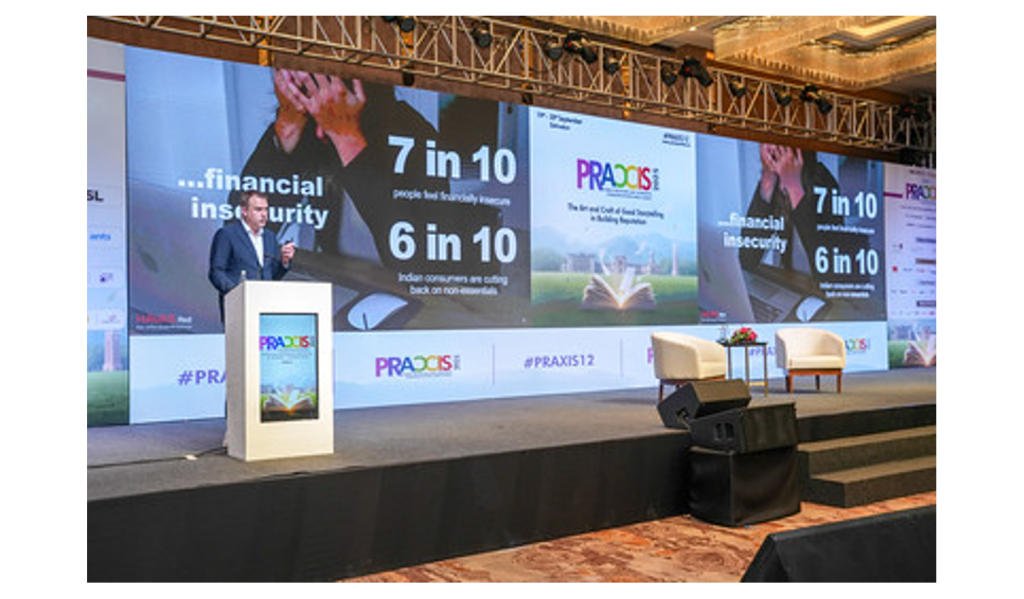
James Wright urged communicators at #PRAXIS12, to prepare for a generational power shift – by moving from storytelling to ‘story-living’
“It’s not a forecast, but a call to action,” declared James Wright, Global CEO ANZ, Global CEO HAVAS Red, and Global Chairman HAVAS PR Network, as he opened his keynote – “From Rage to Resonance: Get Ready for the Thirsty 30s” at #PRAXIS12. His focused message was clear: the future is about shifting from storytelling to story-living.
Wright reflected on the turbulence of the “Raging 20s” – a decade, which he described in his own style, as dominated by anger, anxiety & financial insecurity. Layered with geopolitical conflict, social injustice, cost-of-living crises, fake news, climate change, and eroding personal rights – this era has left consumers both frustrated and vocal. “Rage is everywhere, and it’s a signal,” he emphasised. Citing the Global Customer Rage Survey, he noted that while 35% of people admitted to raising their voice in a customer service interaction in 2015, the number has climbed to 43% in 2025.
But rage, Wright argued, can also be a catalyst for change. He contrasted the Roaring 20s of the past century with today’s Raging 20s and suggested that the next decade – the “Thirsty 30s” – will be defined by transformation. This shift will be fueled by a generational power transition, as Millennials, Gen Z & Gen Alpha rise in influence, each with their own distinct values and expectations.
So, what will these generations be thirsty for? According to Wright: sustainability, experiences, control & human connection. To meet these demands, communicators must learn to move hearts before headlines.
He outlined a framework for this transformation:
- Rage brings crisis of trust. Brands must acknowledge consumer frustration.
- Relevance means creating content that truly resonates with audience needs.
- Relationships matter. Building authentic, enduring connections must replace transactional interactions.
- Resonance creates emotional depth, forging loyalty that lasts far beyond campaigns.
For PR and communications professionals, this shift requires a mindset reset, which he outlined clearly:
- Make trust your cornerstone.
- Mind what’s out: avoid purpose-washing, influencer overload, and sales-only strategies.
- Align with what’s in: authenticity, meaning & cultural relevance.
- Be people-centric, adapting brand storytelling to real shifts in expectations.
- Stay culturally fluent, keeping pace with social change and conversations.
Wright concluded with a challenge: embrace ‘story-living’. He cited examples of brands already practicing it – those that embed authenticity and human values at the core of their strategies. His final advice echoed with simplicity and power: “Fill their cup.”
For Wright, the Thirsty 30s will not just be another decade. They will be the moment when communicators move from managing narratives to living them – building brands that people trust, value & love.
In a conversation with Arpana Kumar Ahuja, Jindal Steel who questioned – how do brands know when to engage and when to sit it out? “It depends on the organisation and it depends on the issue,” was his prompt answer. And you cannot present facts that are boring for the lively scene is – ‘story-living’ in action.
Does every brand need community building? Is credibility more important than community? “Authenticity will drive it right,” was his firm opinion.
As AI scales content, how do we keep stories emotional? It will become super hero, but we have to be smart! And if you are wondering, what can we do as communicators, he advised that it will actually lift the standard of our industry, if used correctly.
Finally, when asked what is that one word he would leave with the audience, pat came his reply – “empathy”.
The views and opinions published here belong to the author and do not necessarily reflect the views and opinions of the publisher.