

When we think of Diwali, we think of lights, fireworks, new clothes, and family gatherings. But let’s be honest—no Diwali is complete without sweets. For generations, Mithai has been at the heart of the festival. Laddoos, barfis, gulab jamuns, jalebis—the list goes on and on. These are not just desserts. They carry tradition, they carry memory, and they carry love with that emotional touch.
In the last few years, though, things have started to change. Chocolates, wrapped in gift wrappers and colorful boxes, have entered the festive market in a big way. Brands like Cadbury and Nestlé now push their Diwali gift packs everywhere—TV, social media, and billboards. Even namkeen brands have joined the race, selling festive hampers of salty snacks like Haldiram’s and Bikaji. The fight is simple: who will dominate Diwali gifting? But in the middle of all this marketing noise, Mithai still stands tall as it offers a variety with that ethnic touch.
The Emotional Connect of Mithai
Mithai is not just about sugar and ghee. It’s about the emotion attached to it. Think about it: when your grandmother rolls laddoos by hand or your mother makes fresh barfi at home, what’s really being shared is love. That joy multiplies when you give these sweets to neighbors and relatives. Chocolates are tasty, yes, but they don’t carry that same emotional weight.
Ask any grandparent—for them, Diwali without mithai feels incomplete. They don’t crave chocolates during the festival; they crave gulab jamuns, pedas, and kaju katlis. The flavors take them back to their childhood, to simple celebrations where mithai meant happiness. That connection cannot be built with a bar of chocolate, no matter how well advertised, by even giving that regional flavor in their communication.
A Festival of Endless Sweets
Another reason Mithai rules is variety. India’s diversity shows up on the Diwali platter. Bengal gives us rosgullas, Rajasthan offers ghewar, Gujarat makes mohanthal, Tamil Nadu has mysore pak, and Maharashtra celebrates with modaks. Every region adds its own taste to Diwali.
Walk into a sweet shop during the festival, and you’ll see shelves filled with every possible mithai. People love mixing and matching, packing boxes with a little bit of everything. It’s not just about eating; it’s about sharing something unique from your culture. Chocolates may have a few flavors, but they cannot match the depth and richness of Indian sweets.
Mithai: Affordable, Flexible With a Variety of Offerings
One big strength of Mithai is how accessible it is. Whether you go to a big branded sweet shop or a small halwai around the corner, you’ll find something that suits your pocket. You can buy in bulk, buy just a few pieces, or even taste before you buy—something chocolates rarely allow.
Making Mithai at home is another special advantage. Families can control what goes in: pure ghee, fresh milk, and good dry fruits. That not only makes the sweets healthier but also personal. A homemade laddoo always feels more special than a packaged bar of chocolate.
Tradition Meets Innovation for the Health Conscious
It’s not that Mithai has stayed stuck in the past. In fact, sweet makers have been innovating too. Sugar-free options and dry fruit–based sweets for diabetics and health-conscious audiences are now made available so that they don’t miss the celebration. Some are directly designed to compete with chocolates and keep younger generations interested. This balance between tradition and innovation is one reason Mithai will always be relevant in years to come.
Chocolates and Namkeens Enter the Festive Game
We can’t ignore the rise of chocolates. Cadbury, Nestlé, and others have put their muscle behind Diwali campaigns. Their glossy “celebration packs” are promoted heavily, and for many urban families, chocolates are now considered modern and convenient.
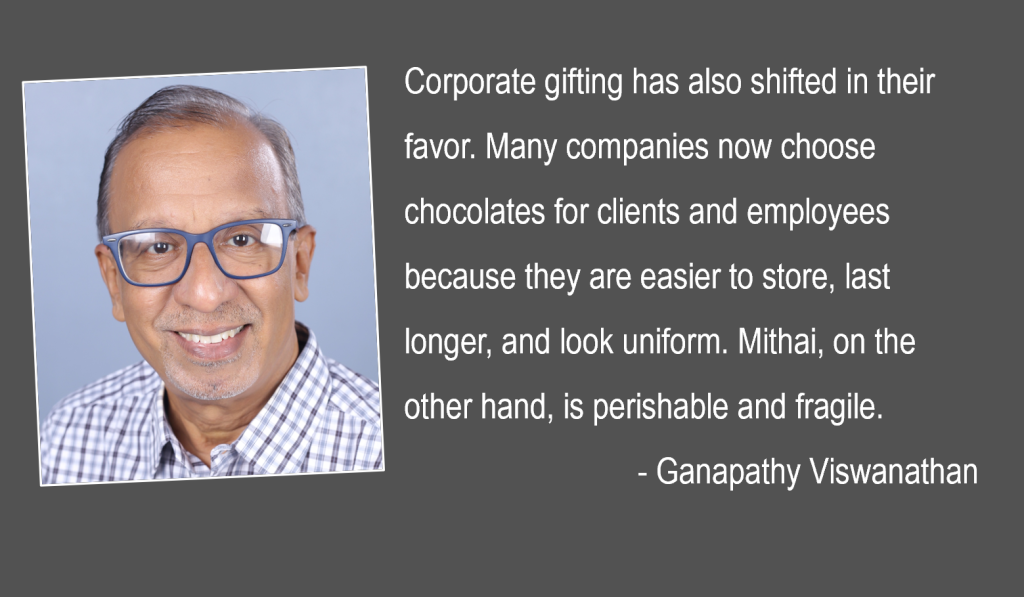
Corporate gifting has also shifted in their favor. Many companies now choose chocolates for clients and employees because they are easier to store, last longer, and look uniform. Mithai, on the other hand, is perishable and fragile.
Even namkeen brands have jumped in, selling festive snack hampers. They offer something different, a savory balance to all the sweets. They have found a place, but again—they don’t carry the emotion of mithai.
Why Mithai Still Rules the Heart of Every Indian
Despite all the competition, mithai continues to be the heart of Diwali. Chocolates and namkeens are fine, but they can’t replace the cultural and emotional place sweets hold. A box of barfi is not just food; it is a gesture of love, a blessing, and a tradition that has survived centuries.
When families exchange Mithai, they are not just giving sugar and ghee—they are sharing history, heritage, rich culture, and memory. That’s something no advertising campaign can replicate nor come closer to.
Conclusion
The festive market has changed. Chocolates shine in glossy wrappers, namkeens tempt with variety, and big brands spend crores on promotions. Yet, when it comes to Diwali, mithai still defines the true sweetness of the season. Affordable, diverse, emotional, and adaptable—Mithai continues to sweeten lives in a way nothing else can.
And let’s be honest: Diwali just doesn’t taste like Diwali without the presence of Mithai.
The views and opinions published here belong to the author and do not necessarily reflect the views and opinions of the publisher.

