

- Regional PR consultancies: The Backbone of Authentic Brand Communication in Bharat
- How Local Media Makes Global Impact: The Power of Regional PR in India’s Tier 2 & 3 Markets
In an age where headlines travel at the speed of light and algorithms dictate attention spans, one question still holds profound relevance — what makes people trust a brand? The answer, even today, lies deeply rooted in credibility. And when it comes to credibility, no medium carries as much weight as traditional print media. It’s tangible, verifiable, and evokes trust that digital noise often fails to deliver.
Across India, as the communication ecosystem expands beyond metros into tier-2 and tier-3 cities, the role of regional PR consultancies and print journalism has become more significant than ever. The printed word, especially in vernacular languages, doesn’t just inform — it connects, convinces, and builds credibility brick by brick.
The Trust Factor of Print Media
In the clutter of social media, sponsored posts, and influencer campaigns, audiences are often unsure what’s genuine and what’s paid. Print, however, carries an inherent sense of legitimacy. When a story is published in a reputed newspaper be it Dainik Bhaskar, The Hindu, or Lokmat it instantly communicates authenticity.
This credibility comes from the rigorous editorial process behind every published piece. Unlike online platforms where information can be uploaded in seconds, print follows verification, fact-checking, and editorial scrutiny. A printed article is not just a piece of information; it’s a statement backed by the publication’s own reputation.
A survey by Reuters Institute once found that over 60% of Indian readers consider print media to be their most trusted source of news — far ahead of television or digital platforms. This trust, when associated with a brand, translates into long-term reputation and loyalty.
Why Brands Still Need Print PR
In today’s communication mix, Print PR continues to be a critical part of reputation management. While digital channels offer speed, print provides depth and authority. A front-page story, a detailed feature, or a brand mention in a respected newspaper often leaves a stronger and longer-lasting impression than a fleeting online post.
Take, for instance, the case of a healthcare brand launching a new medical innovation. A feature in The Times of India or Hindustan Times doesn’t just spread awareness; it positions the brand as credible, scientifically sound, and endorsed by established media. Similarly, for local campaigns, a story in a regional daily like Nai Duniya or Dainik Jagran connects directly with grassroots audiences — the real consumers driving India’s market.
Brands like Dabur, HUL, and ITC have long recognised this power. Their integrated communication strategies always include print outreach — not as a relic of the past, but as a tool of trust-building for the future.
The Rise of Regional PR – Connecting with Bharat
While national visibility is crucial, real influence begins at the regional level. India’s heart lies in its local markets — where buying decisions are shaped by language, culture, and familiarity. This is where regional PR consultancies play an irreplaceable role.
A local consultancy understands the pulse of its audience — how people think, what influences them, and which publications truly matter. They have established relationships with local journalists and editors, ensuring that the brand message isn’t just published, but also understood and valued.
For example, a brand launching a rural education campaign in Madhya Pradesh or Maharashtra will see more impact through coverage in Dainik Bhaskar, Patrika, or Sakal than through any national English daily. These platforms speak the language of the people — literally and emotionally.
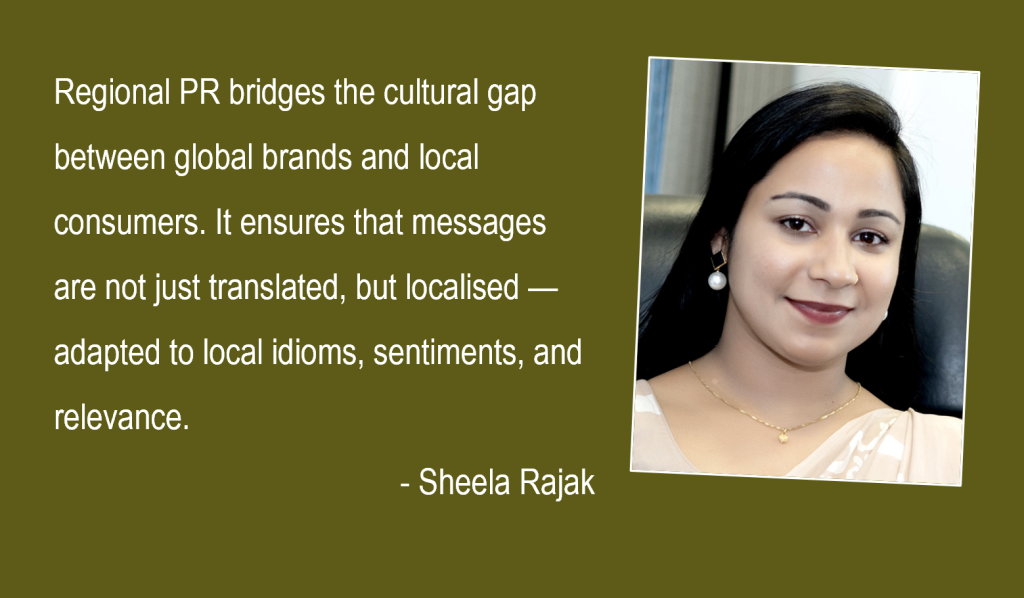
Regional PR bridges the cultural gap between global brands and local consumers. It ensures that messages are not just translated, but localised — adapted to local idioms, sentiments, and relevance.
Case Example: When Regional PR Made the Difference
Consider the case of a leading pharmaceutical company launching a specialised treatment for diabetic foot ulcers. The brand had a strong national presence, but its real audience — diabetic patients and local physicians — were concentrated in tier-2 and tier-3 cities.
Through strategic regional PR outreach, involving print coverage in vernacular dailies across Indore, Jaipur, Lucknow, and Nagpur, the campaign achieved remarkable visibility. Local stories in Hindi and Marathi newspapers helped spread awareness more effectively than English-only national releases. The company not only gained media traction but also built medical credibility at the grassroots level.
This is the power of regional PR — it doesn’t just inform; it transforms local perception into trust.
Print PR vs. Digital: A Balanced Coexistence
The debate isn’t about whether print will replace digital or vice versa. Both serve unique purposes. Digital platforms amplify, engage, and provide immediacy; print platforms anchor, authenticate, and preserve.
A tweet trends for a day, but a newspaper clipping can become a company’s legacy document. Print offers permanence — something tangible that can be archived, quoted, or framed. When both mediums work together, they form a complete communication strategy — one that’s fast, credible, and far-reaching.
How Regional PR Consultancies Add Strategic Value
Regional PR consultancies bring several advantages that large national networks often can’t:
- Local Media Relationships: They have deep-rooted connections with regional journalists, ensuring genuine coverage, not just press release publishing.
- Language Advantage: They understand how to communicate brand stories in local languages with emotional and cultural nuance.
- Cost Efficiency: Regional PR often delivers higher ROI as compared to big-city campaigns.
- Ground Intelligence: They know the regional pulse — festivals, local heroes, or social issues that can tie into brand storytelling.
These factors make regional PR not just an add-on, but a strategic necessity for any brand seeking authentic engagement.
The views and opinions published here belong to the author and do not necessarily reflect the views and opinions of the publisher.

