

Social media is not essential for business growth anymore, what matters is building trust, not chasing visibility. That’s an underlying provocation and frankly may hit a nerve most marketers would rather avoid.
Let me start with a data point that contextualizes this shift. A 2025 Edelman Trust Barometer report highlights that 81% of consumers say trust is a deciding factor in purchase decisions In other words, attention may be rented but trust is earned. And increasingly, social media is failing at delivering the latter.
Now here’s the uncomfortable truth from a digital marketing veteran’s lens: we have over-optimized for visibility and underinvested in credibility.
For the last decade, brands and worse, agencies have been playing a volume game. At least that is one of my observations. Post more. Engage more. Trend more. Hack the algorithm. The assumption was simple: more content equals more growth. But what the video correctly surfaces is that this approach has created a fatigue loop. Not just for consumers but for marketers themselves.
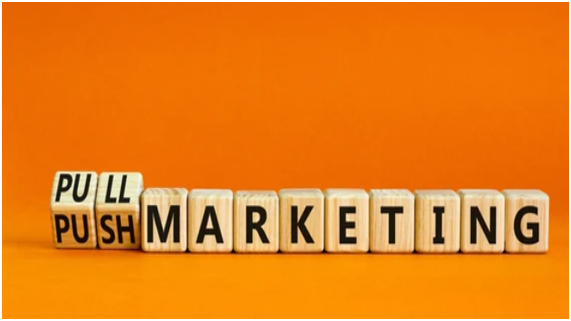
The real shift is this: we are gradually moving from push marketing to pull ecosystems.
Earlier, growth was driven by interruption. You pushed content into feeds and hoped something would stick. Today, discovery is intent-led. Consumers search, explore, validate, and only then engage. This is where long-form, depth-driven platforms, especially YouTube are gaining disproportionate power.
And this is where I strongly agree with the core argument of the video: long-form content builds trust in a way short-form never can. Short-form content may win impressions, but it rarely wins conviction. A 30-second reel cannot replace a 10-minute explanation when the consumer is making a high-consideration decision. The difference is not format, it is psychological depth. Long-form allows you to demonstrate thinking, not just presence.
But let’s not romanticize this either. The rise of long-form is not about abandoning social media. It is about redefining its role. Social media today is no longer the destination. It is the distribution layer. The real asset is what you own your content, your audience, your intellectual property. And this is where the video’s idea of “owning your audience” becomes critically relevant. Platforms change. Algorithms shift. But owned ecosystems compound.
From a strategic standpoint, this is a fundamental pivot.
Instead of asking: How do I grow my followers? The better question probably could be:
“How do I build a system where the right audience finds me?”
This is where the concept of “micro-universes” mentioned in the video becomes powerful. The future is not about building mass audiences. It is about building high-intent communities. A thousand right people will always outperform a million passive followers.
However, here’s where I would extend the argument further – and perhaps challenge it.What is actually over is ‘lazy social media marketing’ and not social media marketing.
The problem is not the platform. It is the approach. Many brands are still seeming to be creating content for algorithms instead of for audiences. They are optimizing for reach instead of relevance. And most importantly, they are confusing activity with impact.
Let me put this bluntly: Posting daily is not a strategy. It is often a coping mechanism.
The real strategic lever today lies in what I call the ‘Trust Architecture.’
It has 3 layers:
First, Depth Content – Long-form assets that demonstrate expertise (YouTube, podcasts, newsletters).
Second, Discovery Layer – Platforms like LinkedIn, Instagram, or X that distribute and amplify.
Third, Conversion Infrastructure – Websites, email systems, communities where relationships are built and monetized. Most brands are stuck in layer two. The winners are building across all three.
Another thing is the ‘algorithm flywheel.’ When done right, long-form content doesn’t just perform once, it compounds. It gets discovered over time, indexed by search, and recommended by platforms. This is fundamentally different from short-form, which is transactional and time-bound. From a business perspective, this changes ROI dramatically. Instead of chasing daily engagement, you are building content assets that work for you 24/7. And this is where AI adds another layer of disruption.
With AI-driven search and recommendation systems evolving rapidly, content that is informational, structured, and credible is gaining priority. This further strengthens the case for long-form, value-driven content over shallow, trend-based output.
But here is the real leadership question—especially for C-suite marketers:
Are we willing to slow down to scale better?
Because that’s what this shift demands. It demands fewer posts, but better thinking. Fewer channels, but deeper presence. Less noise, but more meaning.
This is not easy in an environment that rewards immediacy. But it is necessary in an environment that increasingly values trust. In closing, I would frame the future of digital marketing not as a battle between platforms, but as a shift in philosophy. We are moving from: Attention to Trust. Volume to Value. Followers to Communities. Content to Intellectual Property
And perhaps the most important shift of all:
From ‘being seen everywhere to ‘being remembered somewhere.’
____________________________________________________________________________________________________
The views and opinions published here belong to the author and do not necessarily reflect the views and opinions of the publisher.

