

First of all, wishing all my readers a magical 2026!
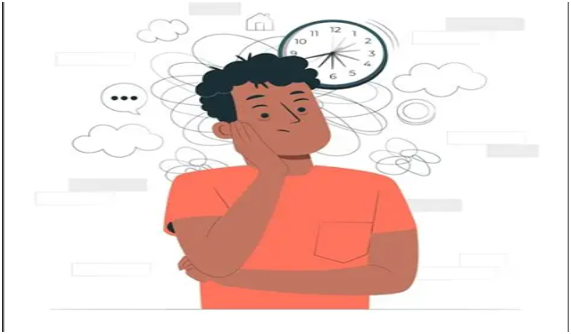
A mind caught in overthinking is like a compass placed too close to a magnet. It appears to point somewhere, but it no longer points true. The more it tries to correct itself, the more distorted its guidance becomes. To the person holding it, however, it still feels precise. This is the hidden danger of overthinking: it gives the illusion of clarity while quietly amplifying distortion.
In leadership, where interpretation shapes reality and internal narratives influence external decisions, overthinking does not merely slow action, it strengthens limiting beliefs in ways that are rarely recognized. Most senior leaders that I have interacted with, assume overthinking is a symptom of high intelligence or responsibility. In truth, it is often a neurological and psychological feedback loop that reinforces fear-based self-concepts. It does not protect us from mistakes. It protects us from emotional exposure and in doing so, it shrinks our perception of what is possible.
To understand why overthinking is such a powerful ally of limiting beliefs, we need to look beneath surface psychology and into how the brain, memory, and identity interact. Hence, I thought of penning my thoughts in my column Writer’s Vault.
The Brain’s Prediction Bias: When Thought Becomes a Threat Detector
The human brain is not designed to seek truth; it is designed to predict danger. When a person begins to overthink, the brain’s default mode network, the system that constructs personal narratives—becomes hyperactive. This network scans past experiences and projects them forward to create imagined futures. In a healthy state, this allows us to anticipate and prepare. In an overthinking state, it becomes threat amplification.
Here is where limiting beliefs find fertile ground. If a leader once failed publicly, the brain does not remember that as an isolated event. It remembers it as an identity signal. Overthinking keeps replaying that memory, extracting new meanings each time, and gradually rewriting the story from “I failed once” into “I am someone who fails.”
What feels like analysis is actually memory-driven fear rehearsal. Over time, this changes how leaders approach opportunity. They do not avoid risk because it is objectively dangerous; they avoid it because their mind has learned to associate uncertainty with emotional pain. Overthinking, in this sense, does not generate insight. It generates emotional conditioning.
How Overthinking Freezes the Self Into a Smaller Identity
From a neuroscience aspect, identity is not fixed, it is a continuously updated model created by the brain. But overthinking interferes with that updating process. When the mind loops through the same worries and interpretations, it strengthens neural pathways associated with self-limitation. The brain mistakes repetition for truth. The more a thought is rehearsed, the more real it feels even if it is inaccurate.
This is why leaders who intellectually know they are capable can still feel internally constrained. Their cognitive understanding has outgrown their emotional conditioning, but overthinking keeps re-anchoring them to older versions of themselves.
Overthinking acts like a psychological gravity field. It pulls perception back toward familiar conclusions:
‘I’m not ready.’
‘I don’t have enough’
‘I should wait.’
What looks like prudence maybe often identity preservation. The nervous system prefers a predictable self over an expanded one. Growth feels threatening to a brain wired for survival.
Why Overthinking Feels Responsible but Is Actually Avoidant
Many executives mistake overthinking for diligence. But in the brain, overthinking activates the same circuits as avoidance. It keeps attention in the mind rather than in action, where emotional exposure would occur. Every meaningful step forward carries a risk of embarrassment, rejection, or uncertainty. Overthinking postpones those feelings. It gives the psyche a way to stay safe while still feeling productive. Yet the price of that safety is shrinking possibility.
Limiting beliefs do not arise because people are incapable. They arise because people learn to avoid the emotional discomfort of expansion. Overthinking becomes the sophisticated language of that avoidance.This is why people who overthink often feel tired, stuck, or subtly anxious. Their nervous system is burning energy without movement, trapped in a state of unresolved readiness.
The Emotional Loop That Keeps Beliefs in Place
From a neurobiological perspective, beliefs are not primarily cognitive. They are emotional memory patterns stored in the limbic system. Overthinking continually re-stimulates these emotional circuits. Each time a leader replays a feared outcome in their mind, the brain releases stress hormones. Those hormones strengthen the emotional memory tied to the belief. The belief becomes heavier, more convincing, more ‘real.’ This is why rational reassurance rarely dissolves limiting beliefs. The belief does not live in logic. It lives in the body.
Overthinking keeps those beliefs alive by re-emotionalizing them. What feels like problem-solving is actually fear reinforcement.
How Overthinking Distorts Time and Possibility
One of the most subtle effects of overthinking is its distortion of time. The mind collapses the future into the past. New opportunities are evaluated using old emotional data. A leader might say, “I need to think more about this,” when in reality their nervous system is saying, “This feels like something that once hurt me.” (Take a moment to think about this)
Overthinking prevents the nervous system from updating its model of what is now possible. It traps perception in yesterday’s constraints. This is why growth often begins not with new strategies but with nervous system safety. When the body no longer interprets uncertainty as danger, the mind naturally becomes clearer.
What Changes When Overthinking Loosens Its Grip
When overthinking softens, something remarkable happens. The mind becomes quieter, but not emptier. It becomes more accurate. Leaders begin to sense which thoughts are signals and which are echoes. They feel more grounded in the present rather than haunted by projections. They act with less certainty and more trust—and paradoxically, their decisions improve.
This is not because they stop thinking. It could be because they stop believing every thought. Limiting beliefs lose power not when they are debated, but when the nervous system stops feeding them with emotional energy.
A Quick Reflection
Overthinking is not your enemy. It is your nervous system trying to protect you using outdated maps. But when it goes unexamined, it quietly becomes the most loyal ally of limitation.
True leadership expansion does not come from thinking harder. It comes from feeling safer while moving forward.
The mind does not need more answers. It needs less fear. When fear loosens, clarity emerges. When clarity emerges, belief expands. And when belief expands, the future opens.
__________________________________________________________________________________________________________
The views and opinions published here belong to the author and do not necessarily reflect the views and opinions of the publisher.

