

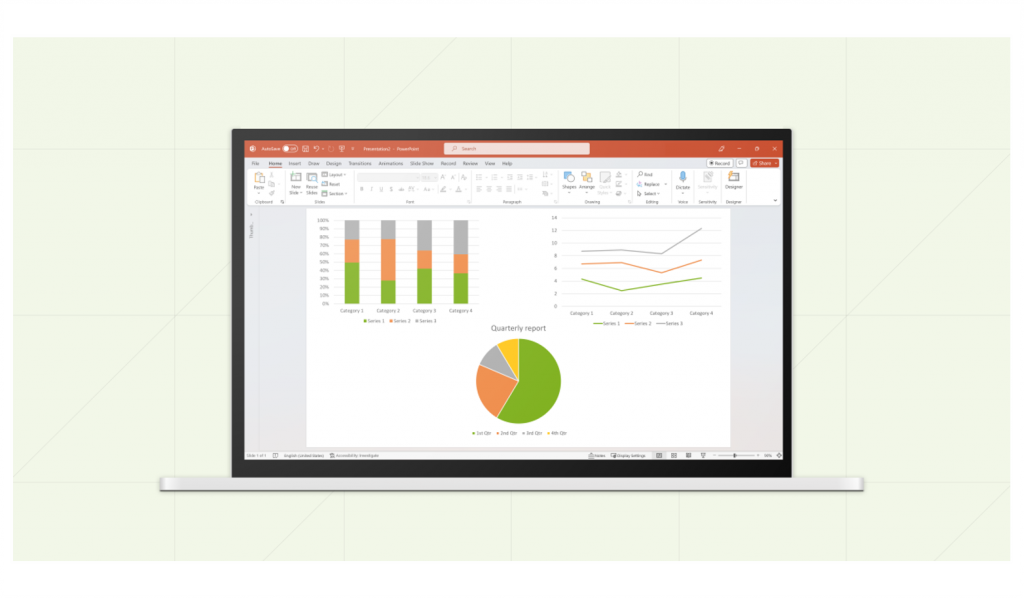
Presentations today have become the corporate world’s equivalent of salt – you sprinkle them everywhere, whether the dish really needs it or not. Whether it’s a board meeting, a sales pitch, a classroom lecture, birthday message (yes! Even that’s happening!) the instinct seems universal: Let’s make a presentation! But here’s the big question: do presentations always help us communicate better – or do they sometimes leave us hiding behind bullet points?
At their best, presentations are powerful. They distil complex ideas into digestible visuals, marry words with images, and help structure what might otherwise be an aimless ramble. The right slide at the right moment can crystallise a thought in a way that spoken words alone cannot. A graph showing rising costs or falling revenues doesn’t just say it – but shows it.
But here’s the flip side: too often, presentations are treated as magic wands. The assumption is that throwing together a slide deck automatically translates into clarity, authority, and impact. In reality, a presentation is only as good as the thought behind it. The trouble also lies in how people use presentations. Somewhere along the way, we collectively forgot that slides are meant to support the speaker, not replace them. Instead, many presentations morph into reading exercises, where the presenter recites verbatim what’s already written on screen. At that point, the communication is redundant: the audience could just as easily have been emailed the document. Worse still, an over-reliance on slides can omit the human connection. A good conversation thrives on eye contact, storytelling, and spontaneity – but these often wither under the line “next slide, please.”
There’s also the issue of overload. Often in an effort to impress, presenters cram every statistic, chart, and clever quote they can find onto their slides. The result? A visual traffic jam. Such slides eventually overwhelm, leaving the audience trying to decode. Communication, ironically, takes a back seat.
Of course, this doesn’t mean presentations are not redundant. Used thoughtfully, they can sharpen focus, spark engagement, and anchor memory. They work particularly well when there’s a lot of data to unpack or when visual metaphors can drive home a point. Presentations help when the message is clear and the slides serve as amplifiers thereby complementing rather than competing.
The truth is, communication is not about slides; it’s about connection. Effective communicators often know when to lean on slides and when to ditch them altogether. They recognise that sometimes, the most powerful presentation isn’t a slideshow at all – it’s a well-told story, a thoughtful pause, or a direct conversation that leaves no room for distraction. After all, people don’t remember bullet points nearly as well as they remember how you made them feel.
So next time someone says, Let’s make a presentation, perhaps the real question should be: Do we need one?
The views and opinions published here belong to the author and do not necessarily reflect the views and opinions of the publisher.

